I have loved learning more about poetry and finding a love for it again. There was definitely a time when I did not want to learn about poetry or write poems because of how I have learned it in the past and how confusing it use to be. Now, I love poetry and all the differences it brings to the table. When I say differences I mean structures, perspectives, meanings, and so much more. There is a great amount that we can learn from poetry. In my notebook, I catch myself creating poems all the time now because I love how they can be short, but carry so much meaning and emotion in them. I am very thankful to have poetry back in my life and grateful I had a wonderful professor, Dr. Beth Frye, who helped me love it again.
Helpful Resources
.
.
.
.
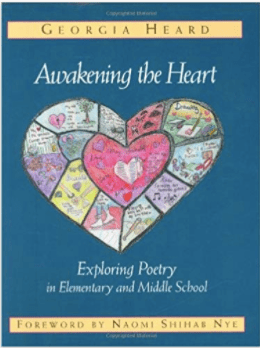
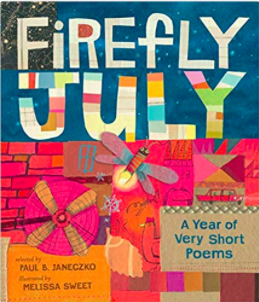
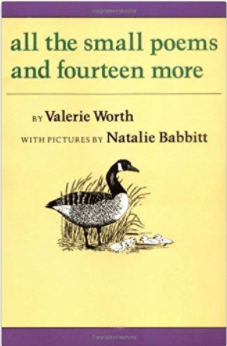
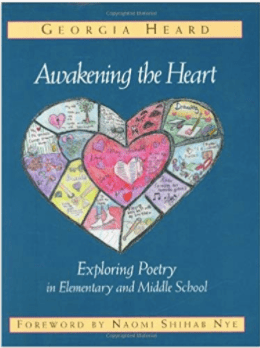
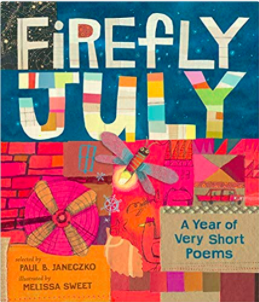
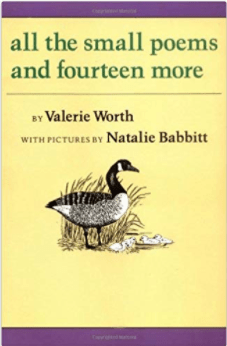
Each of these books have been super helpful and give ideas for poems that can be written. I found each of these to act as a guide for me when I was writing my own poetry. Awakening the Heart is a textbook and it is loaded with ideas that can be incorporated with poetry. With books like Firefly July, All the Small Poems and Fourteen More, and Love That Dog there are great mentor poems to help create your own.
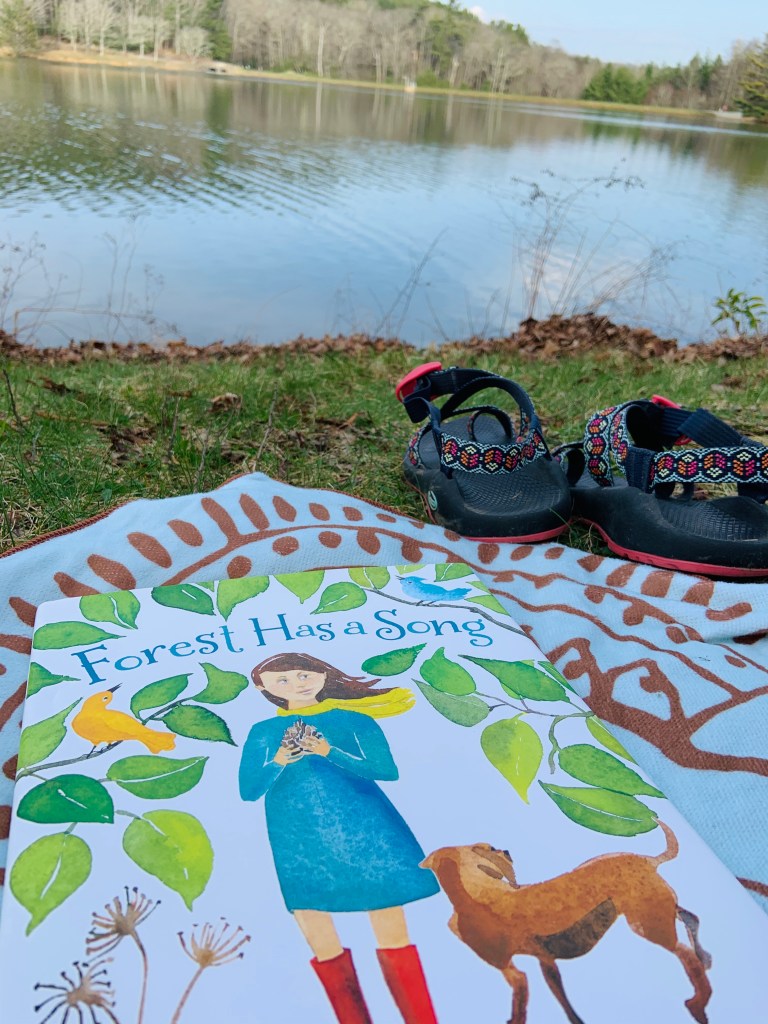
Forest Has a Song is one of my favorite books of poetry. I love how the forest is inviting the girl in and how the reader gets to hear multiple perspectives like the girl’s, the animals, and the forest. I created a poetry invitation which can be found here. There are many poems in this book that can serve as a mentor text to be used to create your own poem. This is definitely a book I will use a lot in the future.
Thank you, poetry for everything you have taught me not only as a poet, but also as a person. There were many layers I did not know about you. I cannot wait to teach my students poetry and my hope is they will find a love for it just like I did. Poetry, I admire you and all that you bring to the writing world. Thank you.
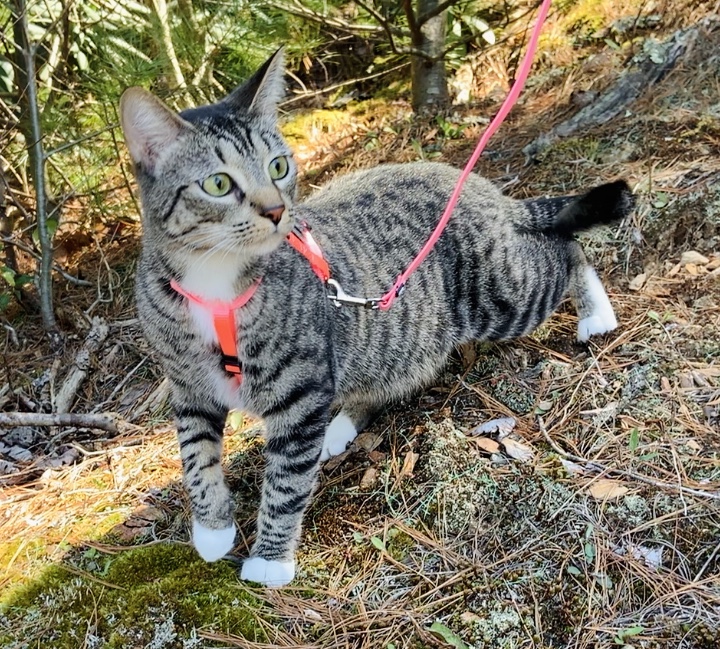
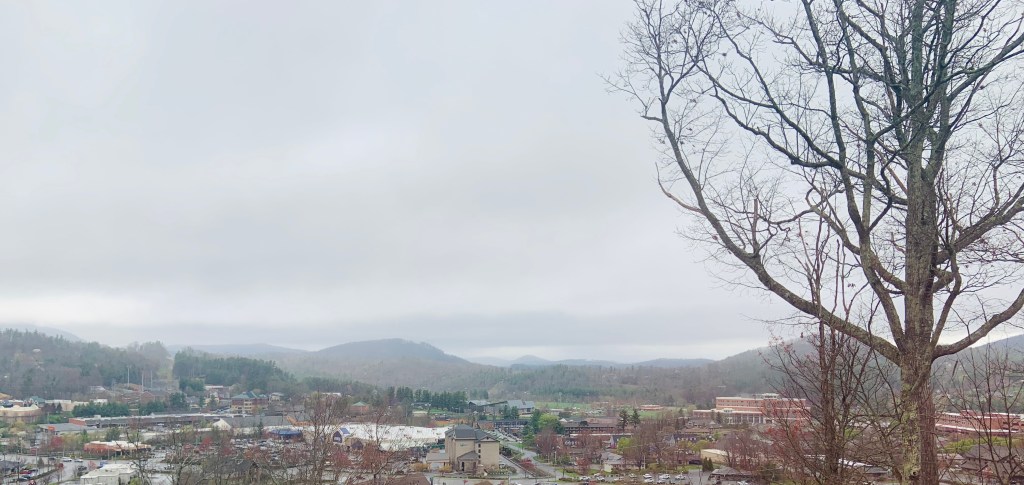
Both of the haikus written above are photoku. A photoku is a haiku based on a photo. I find having the photo makes it even more enjoyable to write a haiku and it allows me to dig deeper into the senses that could be felt through these photos. Both of the photos were taken by me. The first is my sweet girl, Aggie and the second is the view from my apartment here in Boone, NC.
Additional Resource
Nat Geo Wild is a great resource to use. There are so many videos about animals in the wild, vets that help the animals, animals in recovery, and animals that are pets. Having these videos can help support the writing of haikus and can be used in the classroom.
Readings for this week were, Awakening the Heart by Georgia Heard, Firefly July poems selected by Paul B. Janeczko, and All the Small Poems and Fourteen More by Valerie Worth.
Reading Poetry
I have always loved reading poetry, but sometimes feel like it is a lot to understand and take in. Luckily, I have had teachers in the past who help break down the poem to make it more understandable. I have also read poems that were easy to interpret on the first read, but they were long and used much wording. I remember growing up and read Where the Sidewalk Ends by Shel Silverstein and loving them. They were so enjoyable to read and they were short and understandable. One of my teachers even did a lesson on some of the poems and we created ways we interrupt the poem we chose for a project. That made reading the poems even more exciting. As I got into high school though, reading poems became a task and all of the poems we read were so advanced and as a high schooler, I did not even want to try to read and understand some of the poems that were given to us.
Writing Poetry
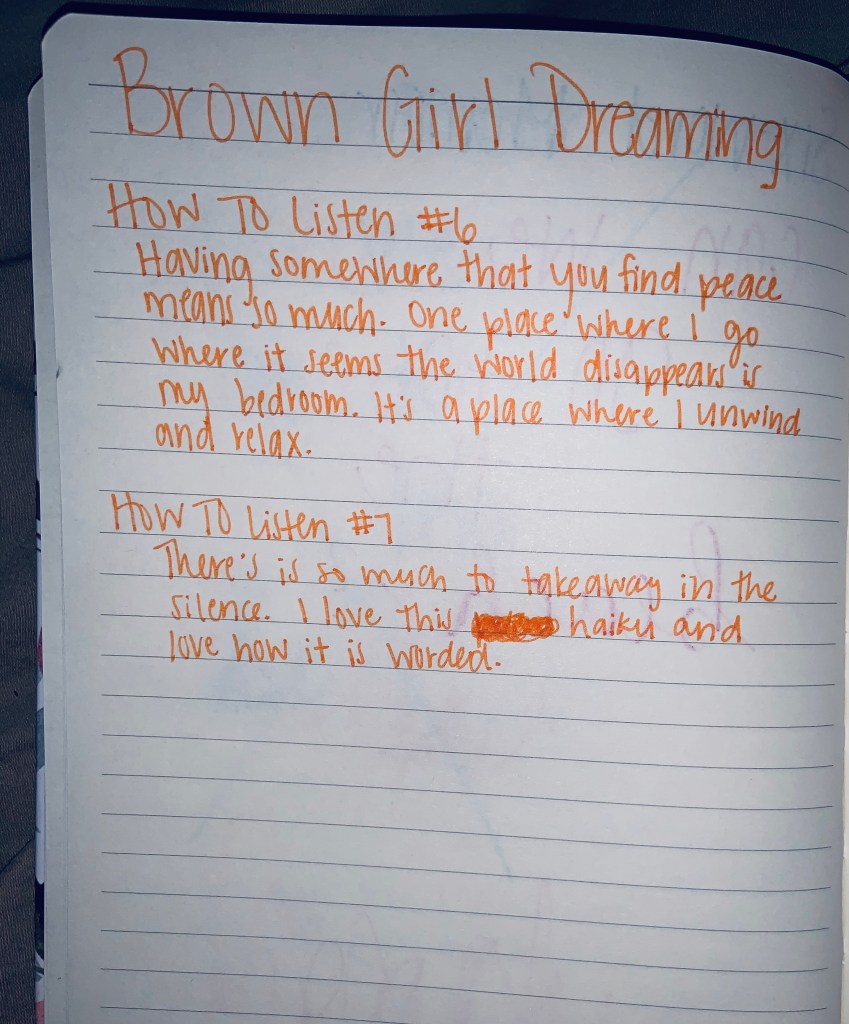
I never was much into writing poetry until this semester. Just like reading poems in school, writing them also felt like a task. I didn’t think I was good at them because I thought I had to include so much to get the point across and I was trying to make them look like the ones we were reading in class. It was not enjoyable and felt very tedious. I also think because I was comparing mine so much to the other poems, my own thoughts and ideas were getting pushed away so I could make my poem look “better”. This semester, I have found a joy in writing poetry and seeing how poems can be short and powerful or long and powerful. Having different mentor texts like Brown Girl Dreaming by Jaqueline Woodson has been very beneficial to see this two structures. She also includes haikus in her work and I sometimes forget haikus are also poems. Haikus are short, but they hold so much emotion.
Teaching Poetry
I have not had the chance to teach poetry, but I hope when I do it will be fun for all. I want to start poetry lessons in younger grade levels so they have a sense of what poetry can be and not get tangled up thinking what I did. When I learned about poetry, it was later in elementary school, but younger grades can do it too. This could potentially plant a seed of enjoyment into them and gain an understanding of poetry.
Criteria for a Really Good Poem
A really good poem is one that brings out the emotions. This can be joy, anger, envy, love, hope, sadness, and so many more. It’s one that can be understood by many and is relatable. I also need to know and feel the person who wrote the piece emotions as well. Imagery is also a great way to captivate these emotions as well and the layout of the poem. If the poem is in a spiral or in the shape of something, I am more intrigued to read it.
Poetry Environment
The environment when writing should be a comfortable (seating, emotonal, writing) and safe (encouraged, non judgmental) place. It should also be somewhere where literature is supported and encouraged. I have really enjoyed getting a poem every class for Dr. Frye. Each week she brings in a poem and gives each student a copy of it to hold on to. We read it as a class and soak in every word. Just providing students with these poems shows how a little can go a long way.
After the Readings
I still believe in everything I originally included in my prior reflection, but these readings have opened my eyes to more. One example was making sure students still know there are poets still writing poetry today (Heard, 1999). When I was in school, all the poems we read were from the past and we had no examples from the present. It is so important for students to know poetry is still occurring and to bring in examples of it. I also love the poetry centers (Heard, 1999) because each center brings something new for the student and to let them share their voice. Being able to share means so much to anyone and allowing students to do that shows their voice and work matters.
Extra Resource
The Poem Farm by Amy Ludwig VanDerwater is a great place to find incredible poems and extra resources.
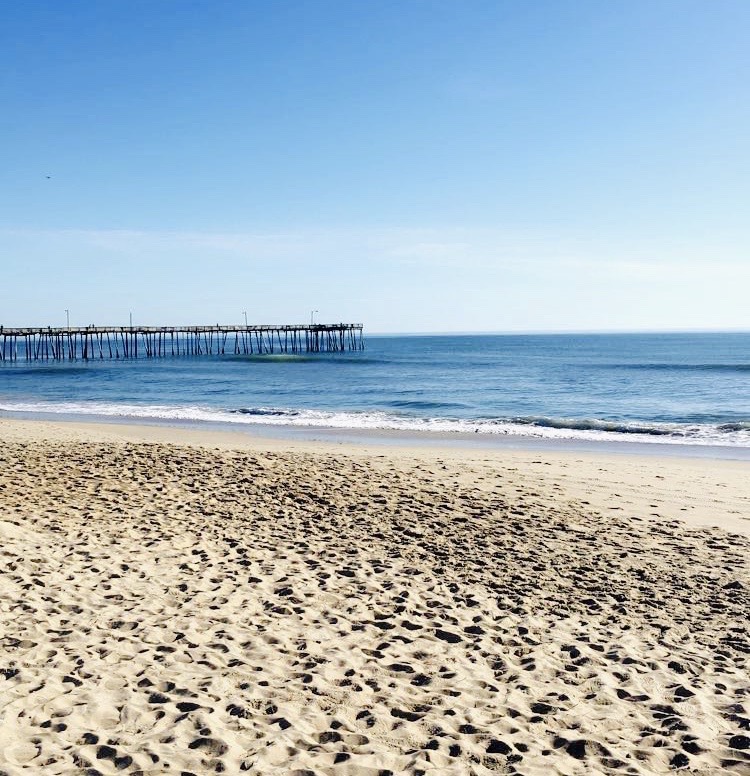
Six-word memoirs are a great way for a student to think of an important place, person, experience, or object that has payed a huge role in their life and write a six-word memoir of it. So basically, to “summarize your life story in six words” (Saunders & Smith, 2014). My six-word memoir is about the beach. The beach is a place where I have so many memories with family and friends who have shaped me into who I am today. It’s a place where I am always relaxed and have no worries. The beach is a place that has been a part of my life and will be the place that I live when I leave Boone.
This website has multiple examples of Six-Word Memoirs that teachers can pull from and has different topics to choose from. Click HERE to visit the website.
TextbookAmy Krouse Rosenthal and Brown Girl Dreaming
Your Turn Lesson
This Your Turn Lesson is adapted from Building Content Through Showing, Not Telling (Dorfman, Cappelli, & Hoyt, 2017, p. 104). This lesson is based around how individuals can express emotions through writing without stating the emotion they are writing about. The mentor text used for this lesson is Those Shoes by Maribeth Boelts. Click HERE to view the lesson.
Dorfman, L. R., Cappelli, R., & Hoyt, L. (2017). Mentor texts: teaching writing through childrens literature, k-6 (2nd ed.). Portland, ME: Stenhouse Publishers.
Saunders, J. M., & Smith, E. E. (2014). Everyone word is on trial: six-word memoirs in the classroom. The Reading Teacher, 67(8), 600–605. doi: 10.1002/trtr.1267
Some students may feel like they have nothing to write about or as though they have no experiences they can share that are good enough. It is incredibly important, as teachers, we show our students we all have something to write about and share with others. We need to model different stories to our students and share our own experiences as well. Students need to know they do not have to write about grand events in their life, but they can write about their everyday experiences. They need to know that their stories of going to school or what they did that afternoon is just as important as a story of them going on a big vacation.
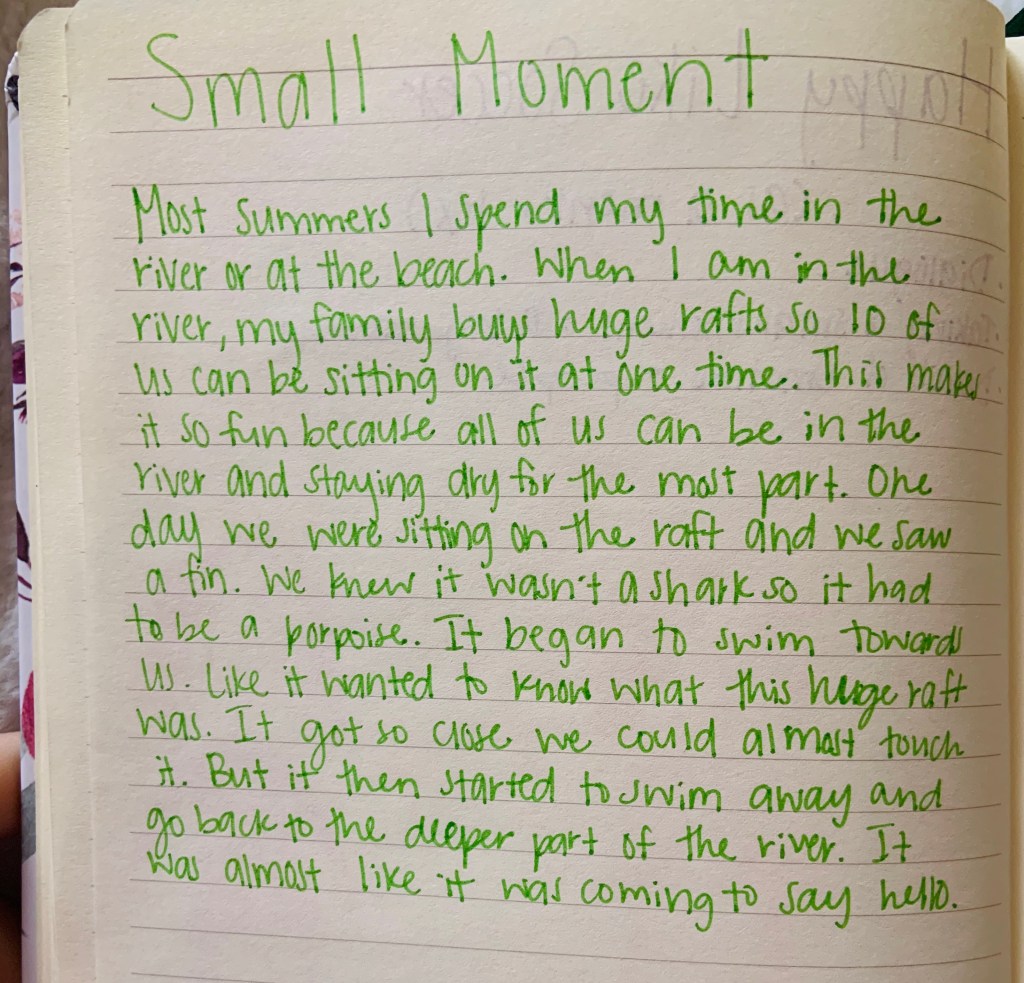
A Small Moment Narrative is where students can take a small moment from their life and dig deeper to recall certain details that makes this story memorable. Below I have created a draft of my Small Moment Narrative. I will be adding more to the story such as emotions and dialogue throughout my next few drafts. These Small Moment Narratives are a great place for students to start and learn how to elaborate in their writings.
Helping Students to Write Their Stories
There are many strategies that can support students find their voice as writers. These strategies will help the students to begin brainstorming different ideas and topics of their own that they can write about. Mentor texts are also great to incorporate with these strategies. Mentor texts such as Textbook by Amy Krouse Rosenthal, Happy Like Soccer by Maribeth Boelts, and Shortcut by Donald Crews are just a few that can be helpful for a students who is trying to find their own voice as a writer. It is important that when we, as teachers, model these strategies, we use stories that our students can also relate to and not something only we can. If we write about traveling across the country, some or most of our students could probably not relate and would find it harder to find their own voice.
Strategies to help support students
Create heart maps. Heart maps are where students draw a heart and include all the things they love. It can be people, animals, places, and objects. This way when they need to write about something, they have a place to refer back to.
Brainstorming small moments. There are many small moments that happen in our lives. Writing a list of them down first is a great place to start. Then when the students are ready to write about one, they have a whole list to choose from.
Incorporating sensory details (Shubitz, S. 2016.) Have students think about the five senses (touch, taste, sight, sound, and smell) they could include in thier stories. A great mentor text for this would be Happy Like Soccer by Maribeth Boelts. Including these senses will make the reader feel like they are also their.
Create lists of five things you love and five things you dislike. I have done this in a class before and it is very helpful. If a students says, “I have nothing to write about,” the teacher can remind them of these two lists and the student will then have ten things they can pick from to write more in depth about.
Creating a list of important places. This doesn’t have to be anywhere extravagant. It can be places like home, school, dance studio, basketball court, soccer field, grandparent’s house, and so much more. Having this list is also a great place for students to refer back to and they can include details like the emotions or some of the five senses they experience at the special place.
Your Turn Lesson
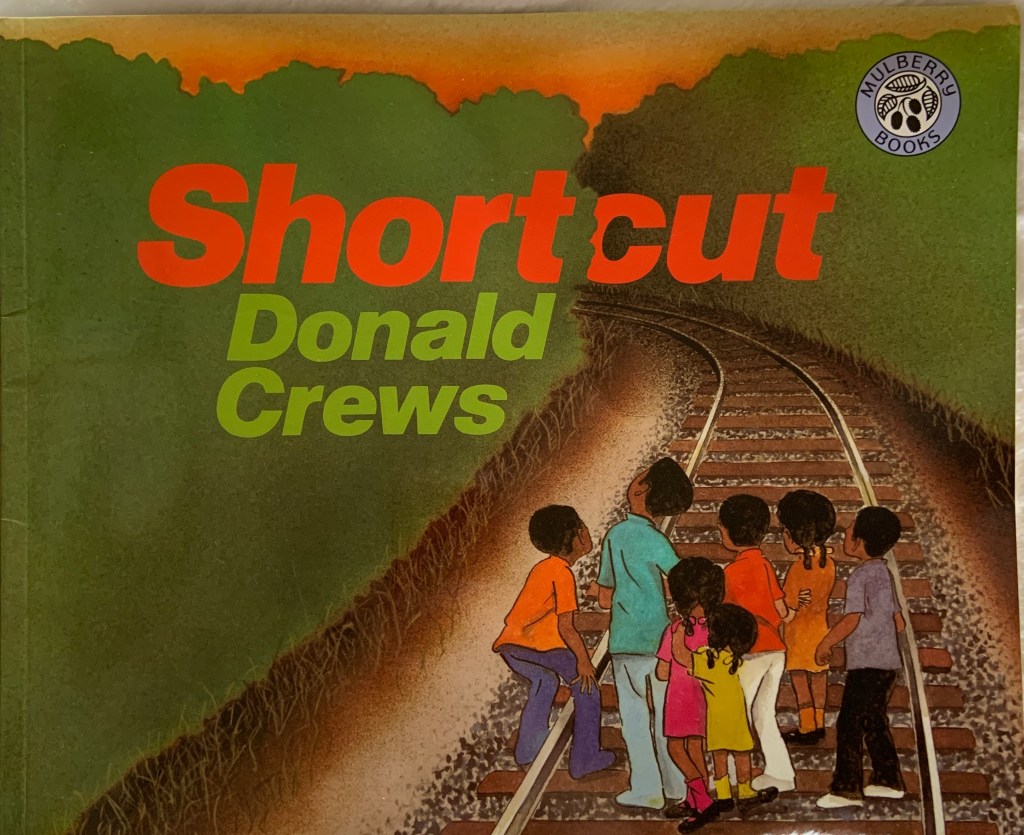
This Your Turn Lesson is adapted from Drawing and Talking to Find Topics (Dorfman, Cappelli, & Hoyt, 2017, p. 84). This lesson includes the mentor text, Shortcut by Donald Crews. Students draw about an experience they have had that is connected to one like Donald had in Shortcut. They then discuss with a partner, have independent thinking time, and have time for reflection. This Your Turn Lesson can be found HERE.
Dorfman, L. R., Cappelli, R., & Hoyt, L. (2017). Mentor texts: teaching writing through children’s literature, k-6. Portland, ME: Stenhouse Publishers.
In class, we read Something Beautiful by Sharon Dennis Wyeth. This is a beautiful book and I plan on buying it for my classroom. If you have not read it, it’s a gem. After we read Something Beautiful, our teacher asked us to think of something beautiful to us. I’m not going to lie, this took some time to think about. There are so many beautiful things in this world, but I finally chose what my something beautiful. Instead of just telling what it is, I will share my poem.
My something beautiful is not something you can hold. It is not tiny and it’s not not large to some. It is something that makes me feel at ease.
My something beautiful is something you can see and feel. But the type of feeling your heart feels. The feeling when you know you are home.
My something beautiful is something I would wake up early for every morning. It makes me know I am home.
My something beautiful is the sunrise over the river. Not just any river, but the Neuse River.
My something beautiful is the sun’s rays hitting gently on the water and reflecting into the sky.
It’s my home. It’s my heart. It holds many memories. My something beautiful will always be beautiful to me.
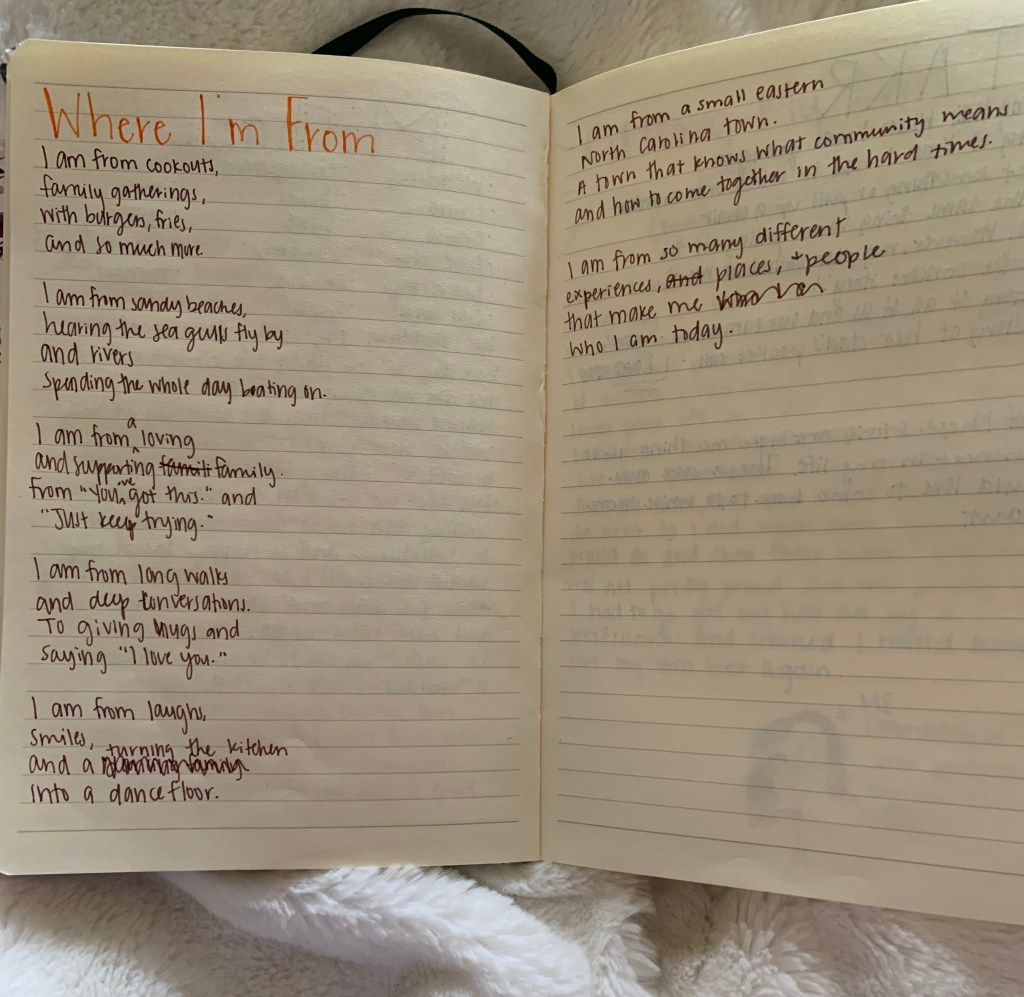
Where I’m From Poem
This poem is meant for people to think about people, places, objects, smells, etc. from their past and in their present. This is a great way for students to begin thinking about these important memories and to write them on paper. To learn more about Where I’m From poems visit George Ella Lyon’s page. Below is my Where I’m From poem. I did not write this based off a template, but there are multiple templates that can be used.
Textbook by Amy Krouse Rosenthal
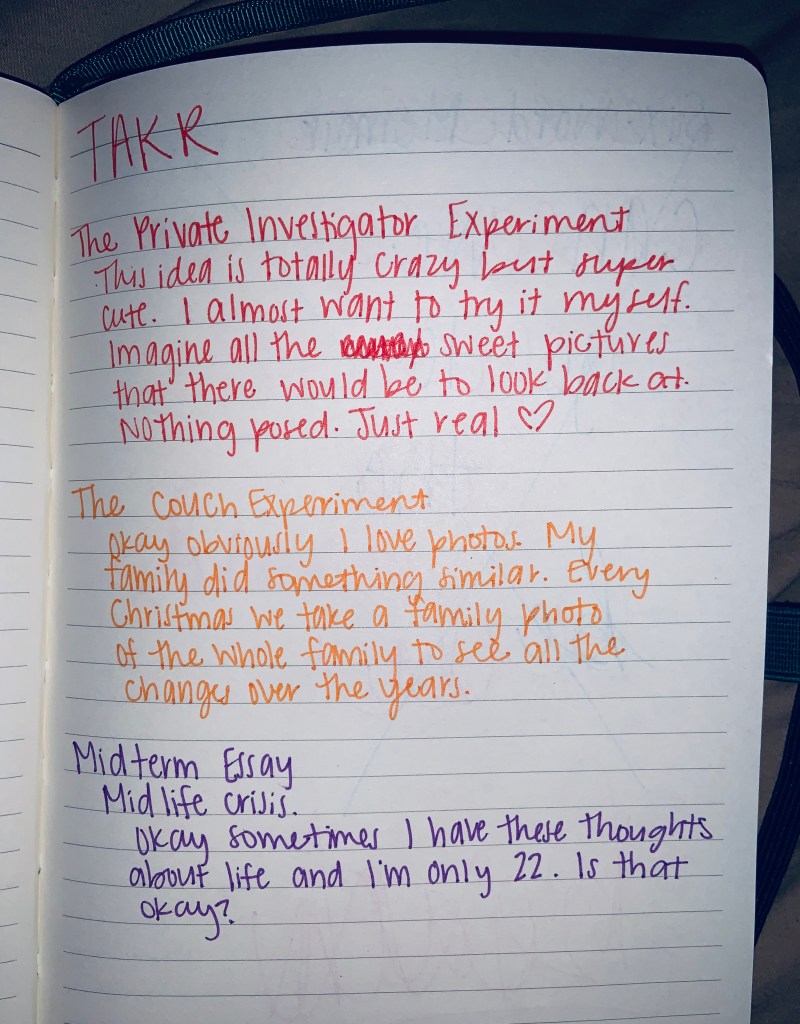
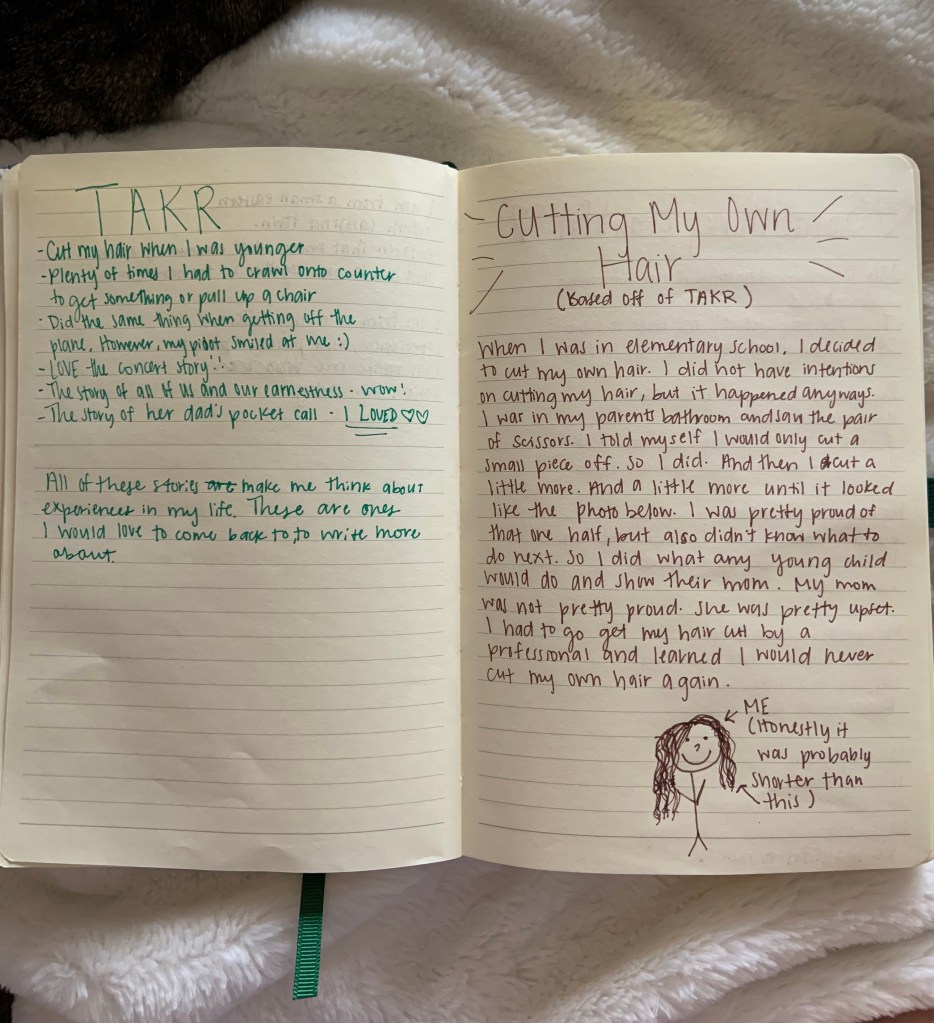
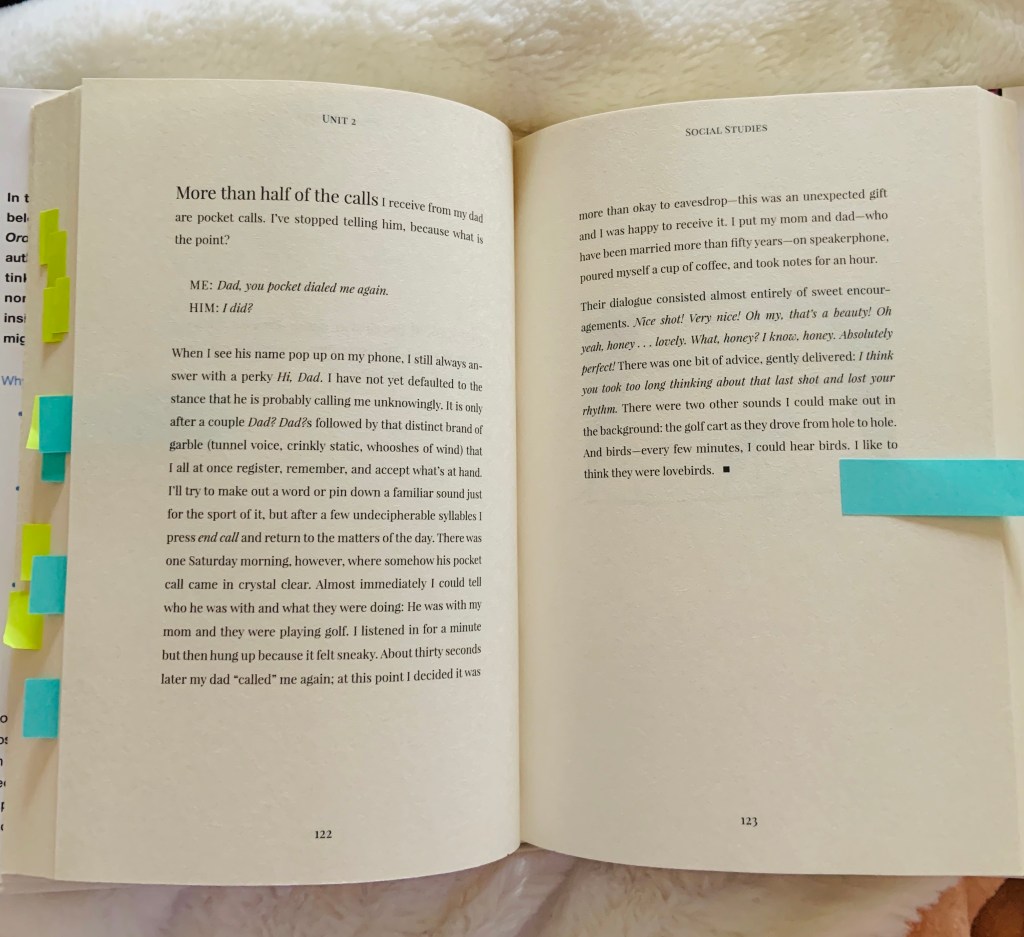
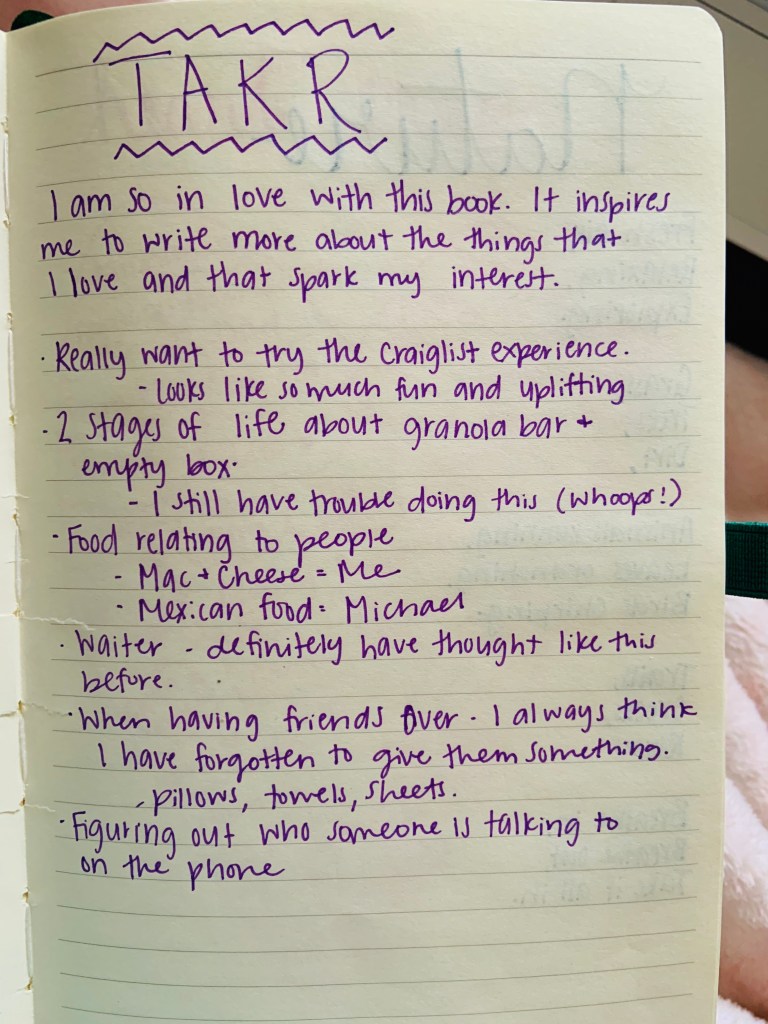
This book is a great mentor text! Whenever I am reading it, I have to grab my Writer’s Notebook immediately. There are so many notes I jot down of her experiences that are similar to my own. Here is an example of what my jots look like and a piece I wrote based off one of Amy’s writings.
Two of My Favorites From this Week
Brown Girl Dreaming by Jaqueline Woodson
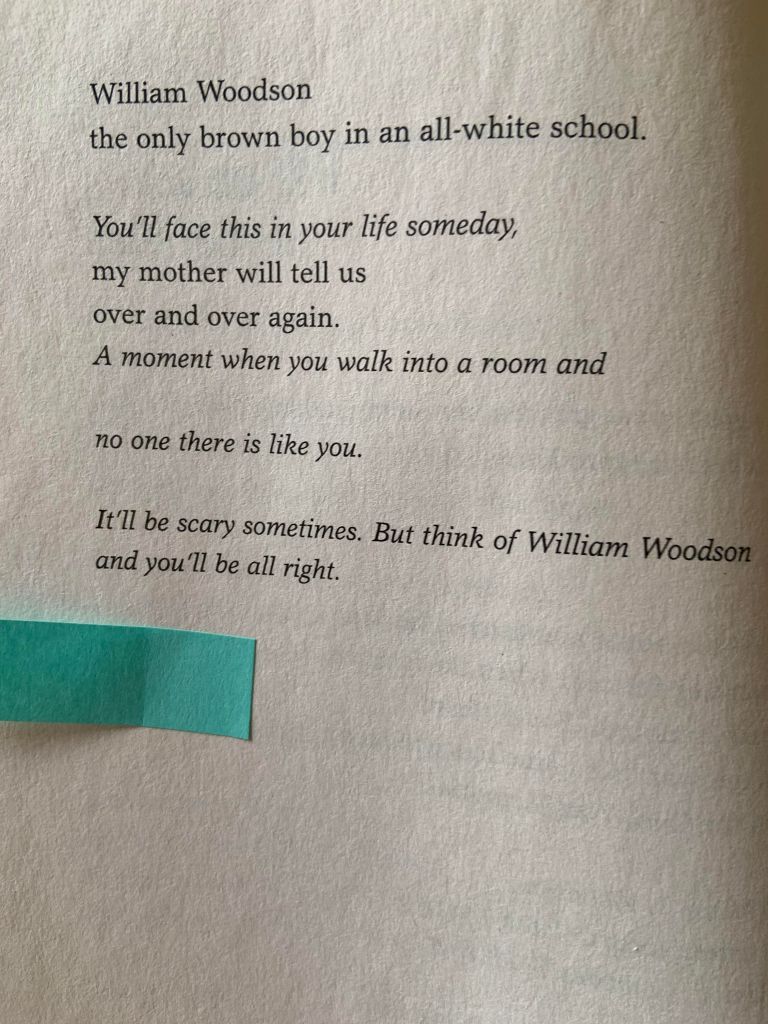
There are so many great mentor poems in this book. The way Woodson writes is so beautiful and the emotion she connects to the poem is even better. When I am reading, I have my sticky notes ready to be placed in the poems that I relate to or that stick out to me. When I am done, I realize there are so many poems that I have sticky noted and can return to in the future. This is also a book that is hard to put down and I want to keep learning more about Jackie.
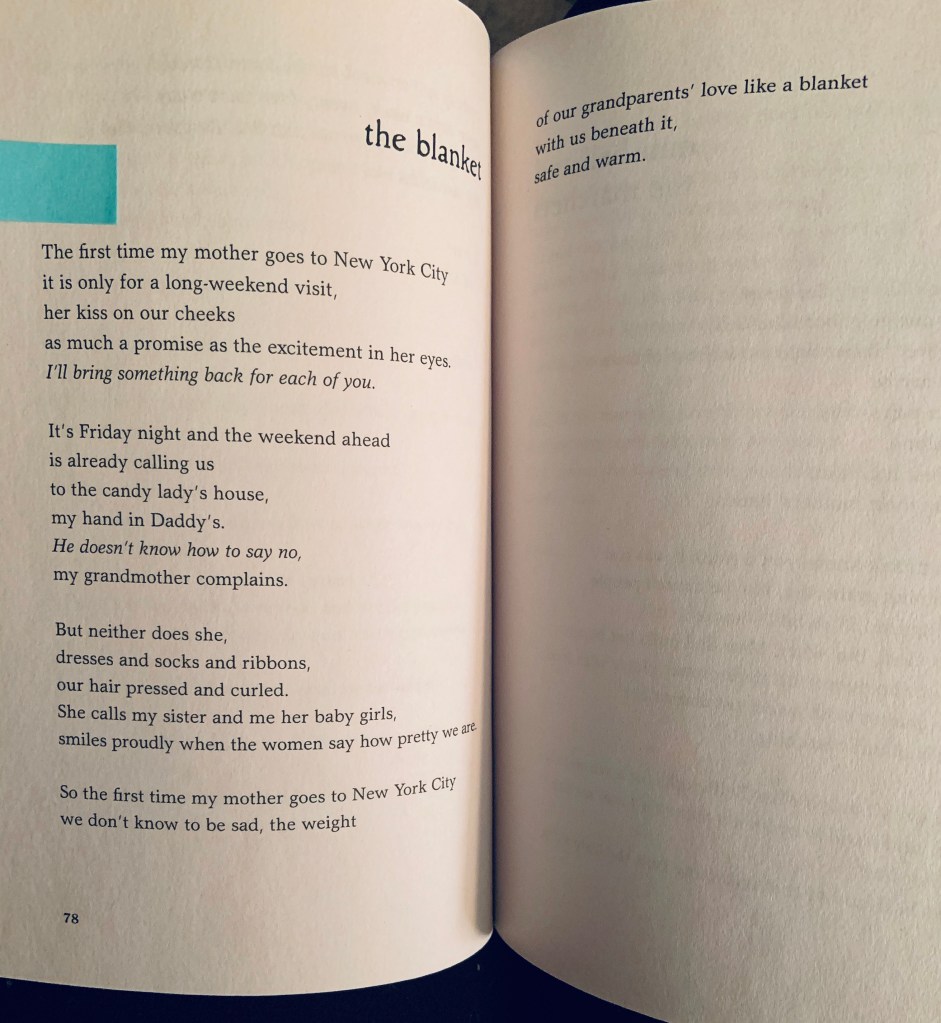
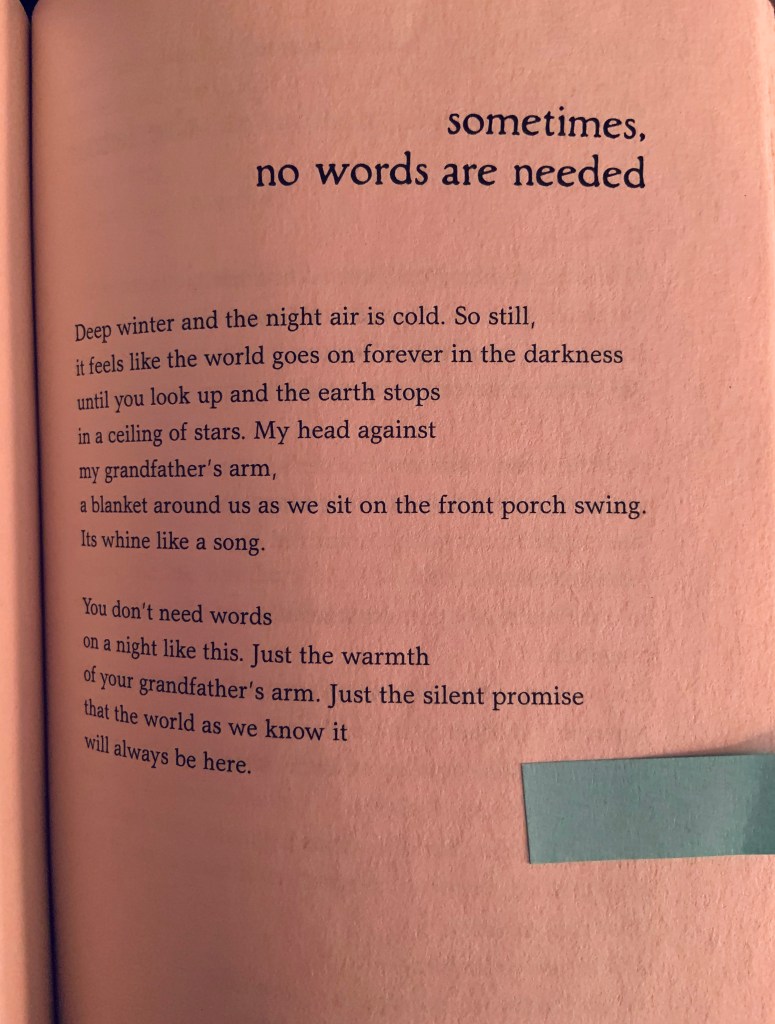
I related very well to this poem because of my relationship with my maternal grandparents. They were the ones who kept me during the day and the ones I would stay with at night if my parents had to go on a trip or were going out on a date. I remember how much I loved to be with them and how safe I felt when I was with them. “… our grandparents; love like a blanket with us beneath it, safe and warm.” I just love this quote and the emotions I feel when reading it.
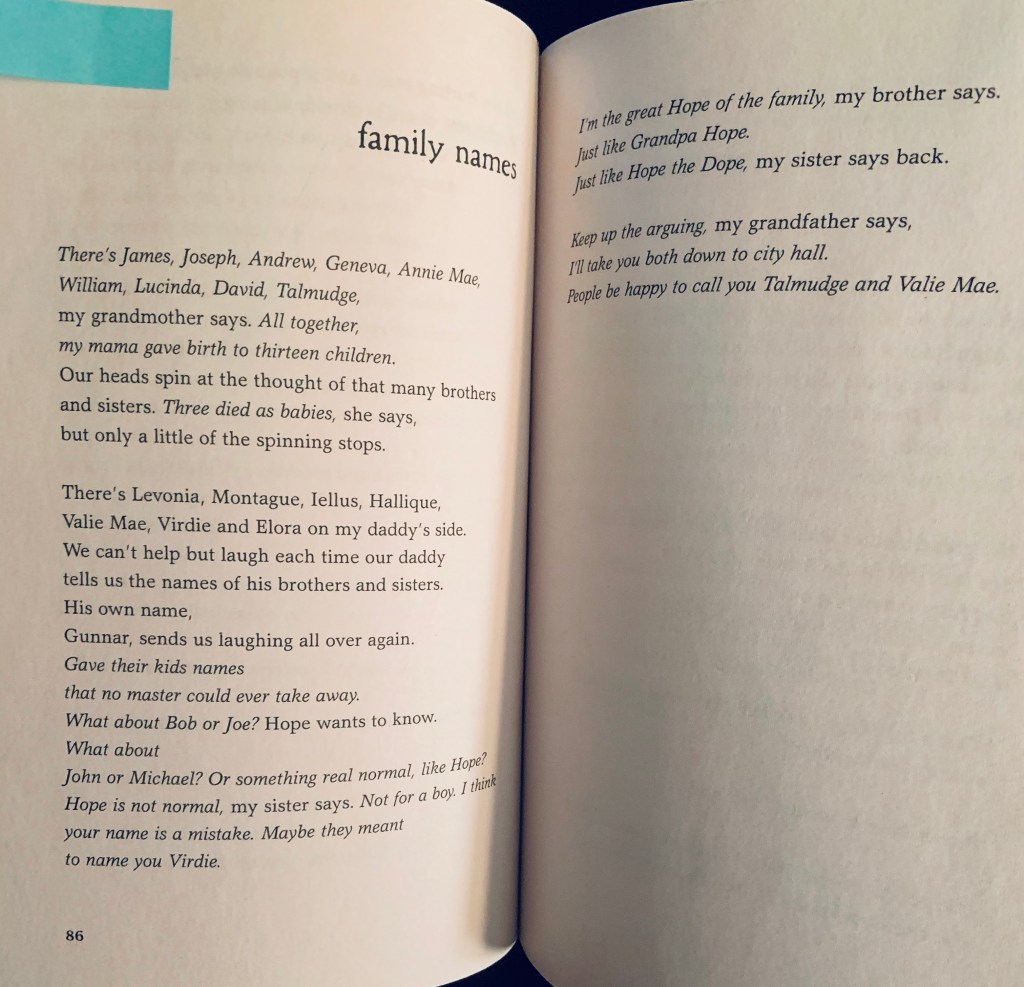
Family names have always been important to my family and I am sure many others. It’s a way to keep the family history going and to learn more about past relatives. I know for me, it is something I want to do when I have children one day. Family names mean so much and I like the idea that Jackie’s brother is named Hope because it’s not an ordinary name for a boy, it is unique to him, and it’s how they can learn more about their ancestors.
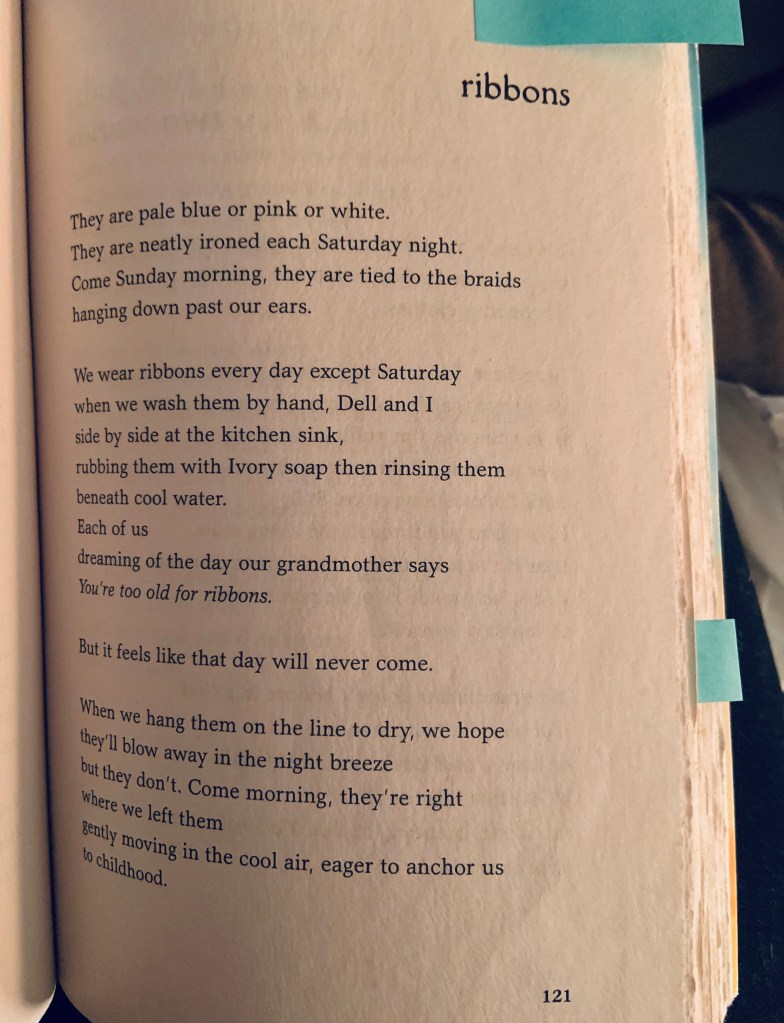
The line that caught my attention the most from this poem is, “… eager to anchor us to childhood.” There are so many things I think back to that anchored me to my childhood and still do. Jackie wanted to make her grandmother happy and knew wearing the ribbon was something that her grandmother appreciated, she did it. Having those memories of the ribbon is something Jackie will always relate to her childhood and I’m sure there are things today that still make Jackie feel anchored to her childhood.
This poem speaks for itself and I am in love with it. There are multiple moments in life where words are not needed and the emotions and expressions speak for themselves. I think we can all think to moments where words are no longer needed to express how we feel.
Shortcut by Donald Crews
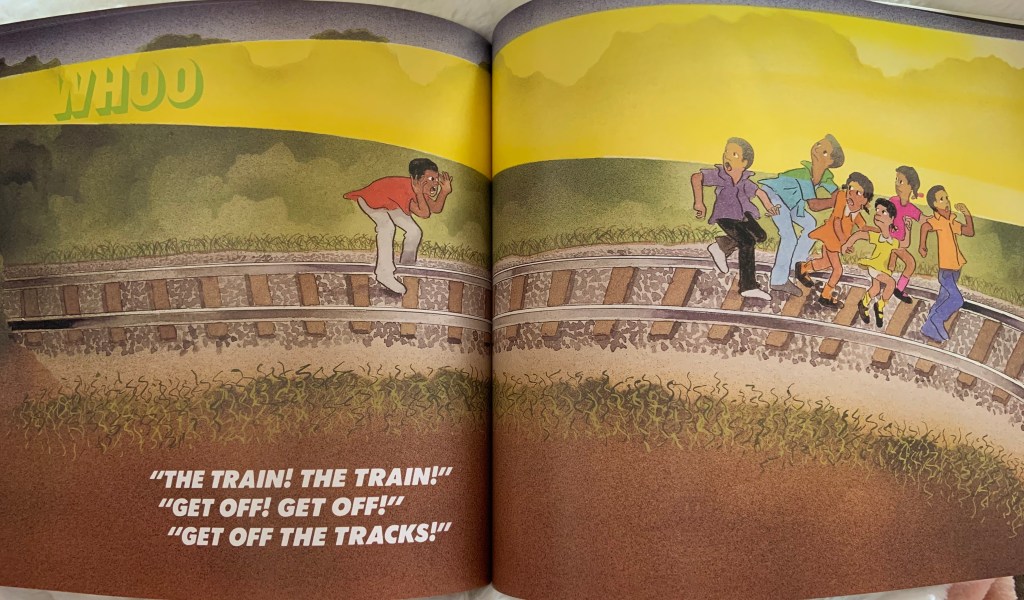
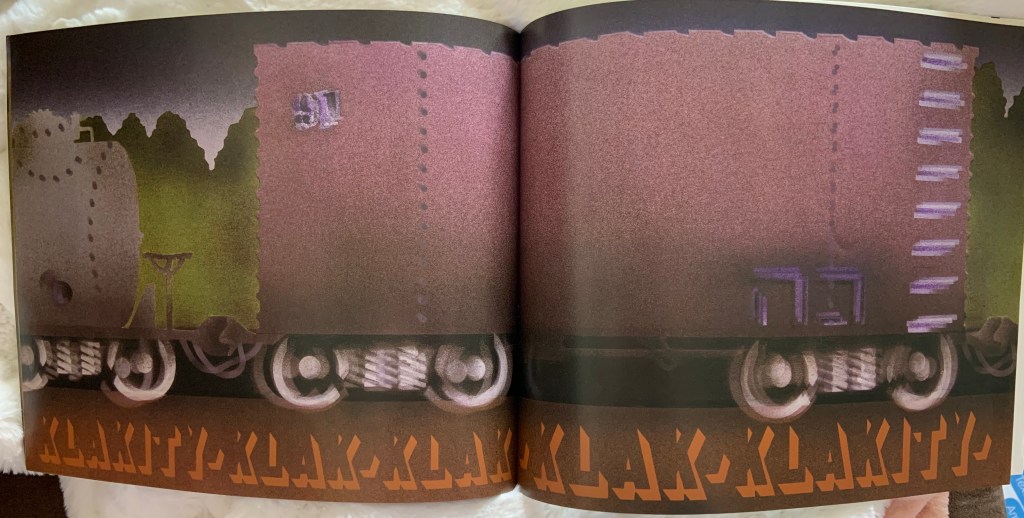
Shortcut is about a story where Donald learns when they have done something wrong and know to never do it again. Donald and his friends were heading home and decided to follow the train tracks. There was a shortcut to the road they could have taken but decided to do this instead. Their worst fear happened a train began to come. They had to jump off the tracks to not get hit. They decided that they would go back and take the shortcut and continue to do that from then on. We have all had these experiences. Maybe not the one Donald had, but definitely times where we know we should have done something else and learn the “hard way”. The pictures in this book were also so vivid and the way Crews included the sounds of the train from its “chooing” to the sound of it on the racks makes the reader feel like they are also there. The whole time I couldn’t stop myself from thinking of times like this and thought it would be a writing piece I would like to come back to later.
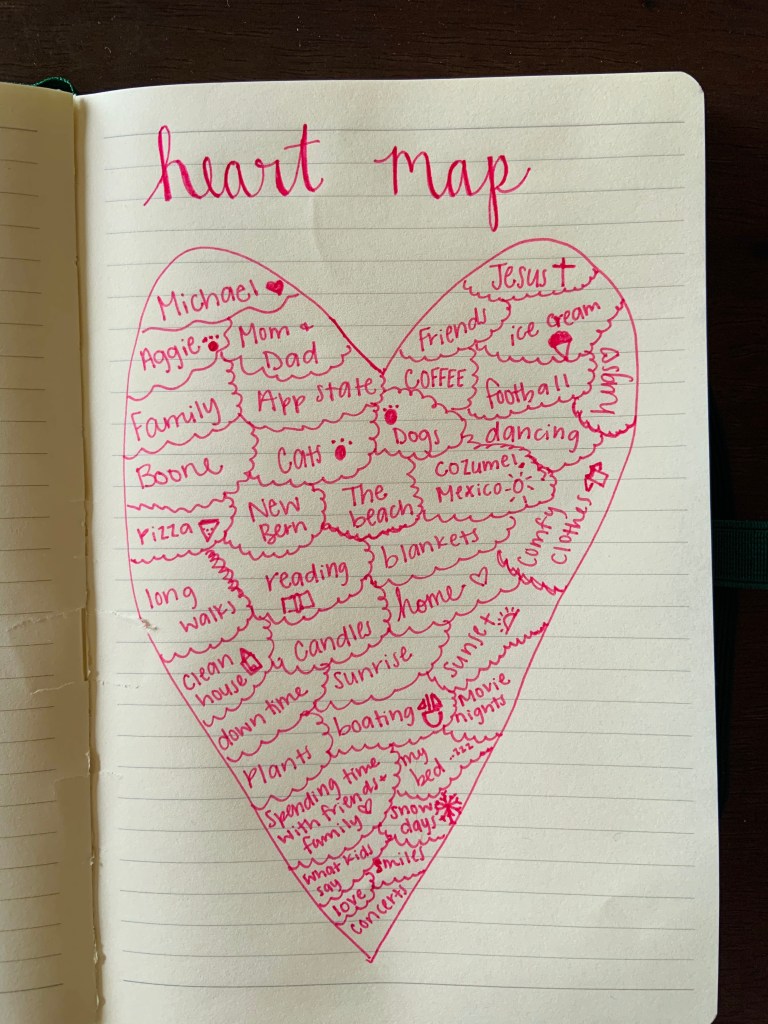
This is my second time completing a heart map. My first time was when I was in Block 2 in undergrad. I love creating a heart map because it reminds me what is important to me and what makes me who I am.
In my heart map I included, my husband, Michael, our cat, Aggie, my parents, my family, Jesus, and friends. I also wrote down some of my favorite foods like pizza and ice cream. When was done, though, I realized I had forgotten one of my favorite foods which is macaroni and cheese. I then included things like candles, blankets, snow days, smiles, reading, and much more that brings joy to my heart.
Heart maps are a great way for students to create ideas for future writings and it is a place where students can include important people, places, animals, food, and objects to them. When reading the article about heart maps written by Heard, I realized just how many heart maps someone can create. These include blank canvas, favorite animal, special place, and much more. There are so many ways for a student to be engaged in creating their own heart map.
Textbook by Amy Krouse Rosenthal
Like I mentioned in my last post, I am in love with this book. If you have not read it, you NEED to!! I love the fact that she writes about anything she wants and it is a place for her to put all of her thoughts and memories. When I am writing in my writer’s notebook, I think back to how she is writing and what she writes about and use it as a mentor text. There are also many stories I relate to and write them down in my writer’s notebook to return back to as things I can write about in the future.
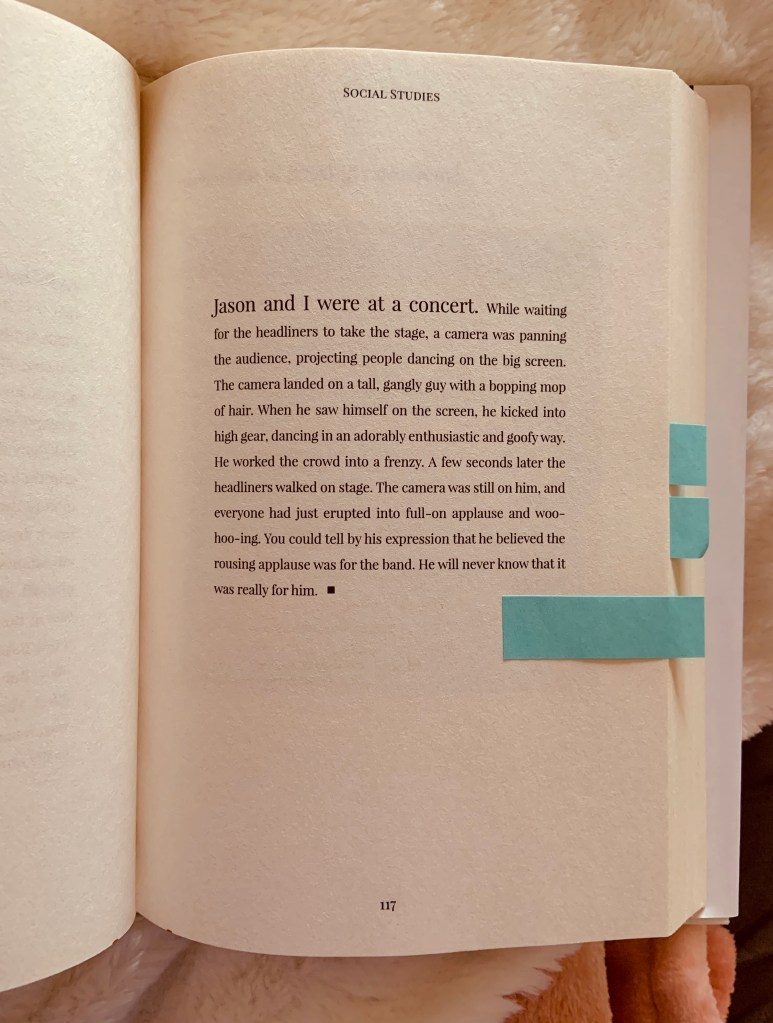
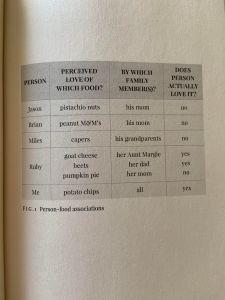
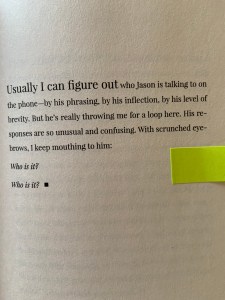
A few of my favorites from pages 60-101 were the Craigslist experience, associating a certain food to people, and trying to figure out who someone is talking to on the phone. After reading the Craigslist experience, it made me really want to try it and I hope one day I will. It seems to be fun and it will allow me to connect with others. When I was reading the associating of food to people, I could not help but thinking how many family members of mine associate macaroni and cheese to me because of how much I love it. I then started to think of the foods I associate to those I know. A few examples are, when I think/see Mexican food I think of my husband, Michael, because he loves it, key lime pie to my mom because it is one of her favorite desserts, and crispy fries to my dad because that’s the way he likes them. Then the last piece I related to was when Amy is trying to figure out who her husband, Jason, is talking to on the phone. I do the same thing when Michael is on the phone. Usually I can figure it out, but there have been times where I had no idea and have to wait in suspense to find out when the phone call is over.
Brown Girl Dreaming by Jacqueline Woodson
Wow! I love this book so far. It is all poems about her life and her parents. There is so much thought and emotion put into each one which makes me want to keep reading and learning more. I also loved how she discusses the differences in the North, where her father is from, and in the South, where her mother is from. Their lives were completely different and her father wanted nothing to do with the South. I have also been using this book as a mentor text when writing poems because I love the way she formats her poems.
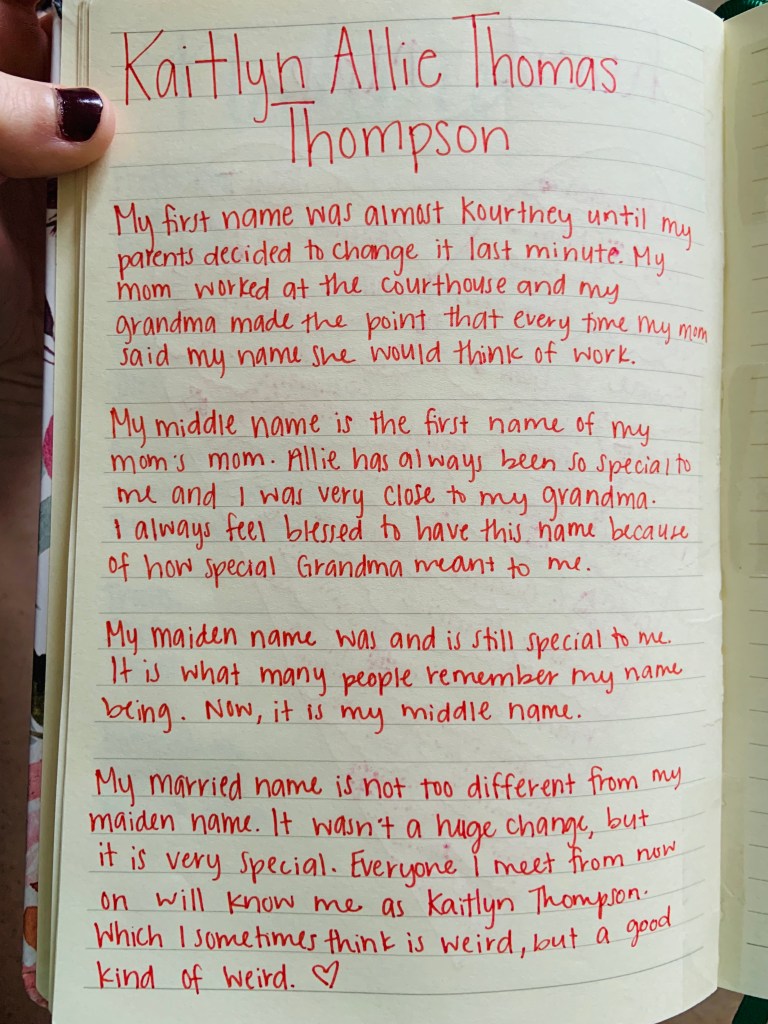
In one of the poems, Jacqueline writes about where her name is from and how her parents chose it. Her father wanted her name to be Jack so she could grow up strong, but the women in the family did not like that idea. So, her mother came up with the name, Jackie. Her father was not the most enthused about this because it was not his first choice, but went along with it. Then her mother decided to name her Jacqueline incase anybody tried to remove the ‘ie’ from Jackie. A writer’s notebook entry we were asked to make was about our name. This was a lot of fun to write about because it made me think about where my name came from and what it may have been. For example, my parents were going to originally name me Kourtney, but my maternal grandmother reminded my mom that she did work in the courthouse and every time she would say my name, she would think about work. So, they decided to name me Kaitlyn instead. Although my legal name is not Kaitlyn Allie Thomas Thompson, my original middle name, Allie, still holds a deep meaning to me since it was maternal grandmother’s first name. We were very close and I miss her so much everyday. To have that piece of her with me means so much. Also, me and Michael have already decided when we have kids and if one is a girl, we will name her Allie.
Mentor Texts Chapter 2
There are many takeaways from this chapter. One of those being how students need a change of scenery to be able to write more and gain more topics to write about. In this chapter, Lynne takes a class outside to gain a different perspective and to gather more ideas of what they could write about. One student wrote poems about the branches and grass. Another student wrote about the baseball field and what it would be like to be playing in one. Just moving the students from inside the classroom to outside made a world of difference and the students seemed to really enjoy it. Another writing strategy that was introduced in this chapter was “Developing a ‘What If’ Story”. For this, the teacher would start out by reading the book The Day the Crayons Quit by Drew Daywalt and once the teacher was through reading, they would then share ideas to help the students brainstorm “What If” scenarios related to the book. For example, the teacher said, “Drew Daywalt saw a box of crayons on his desk one day, noticed that they were used unevenly, and wondered, What if these crayons could talk? What would they say? (Dorfman, L. &Cappelli, R. 2017) The students would then get to think of places they have been and brainstorm “What If” scenarios. This seems like it would be exciting and engaging for the students and gets to let them think outside of the box. This is definitely a strategy I would like to use in my future classroom.
I am so happy to be able to create a writer’s notebook. I have always loved writing in journals, but now having the writer’s notebook, I can write even more like my thoughts, my likes, and my connections to the world. When finding a writer’s notebook, it has to match your style. The one I found has a floral design on the covers, a pen holder on the side, a pocket holder to hold any loose papers I have, and has lined pages. All of these things are what I looked for when choosing my writer’s notebook. I love floral designs, having somewhere to put my pens (I am the world’s worst at losing pens), and having lines to write on (if not, my words would be going in a diagonal).
Recently, I read an article, Writer’s Notebook: A Place to Dream,Wonder, and Explore by Ralph Fletcher. There were a lot of great points I found in this article. One of the quotes I found was, “A student who keeps a notebook can begin to live like a writer—noticing, paying attention, listening, collecting, musing, wondering, playing with language, taking pleasure in her own words.” I could not agree more with this quote. Being able to have somewhere to write down these ideas and connections down is great for a writer and is a place where the writer can always come back to for ideas. Having a writer’s notebook is also a great way for writer’s to see their potential and to learn more about how to write and what they like to write about. One other quote that stood out to me was, “The writer’s notebook has the power to teach writers by letting them write.” The best way to learn how to write is simply practicing and doing it multiple times. The more someone practices at doing something, the better they will become. There is such a power felt when there is an ownership of something. Having a personal writer’s notebook can give that ownership the writer may need.
Serendipity
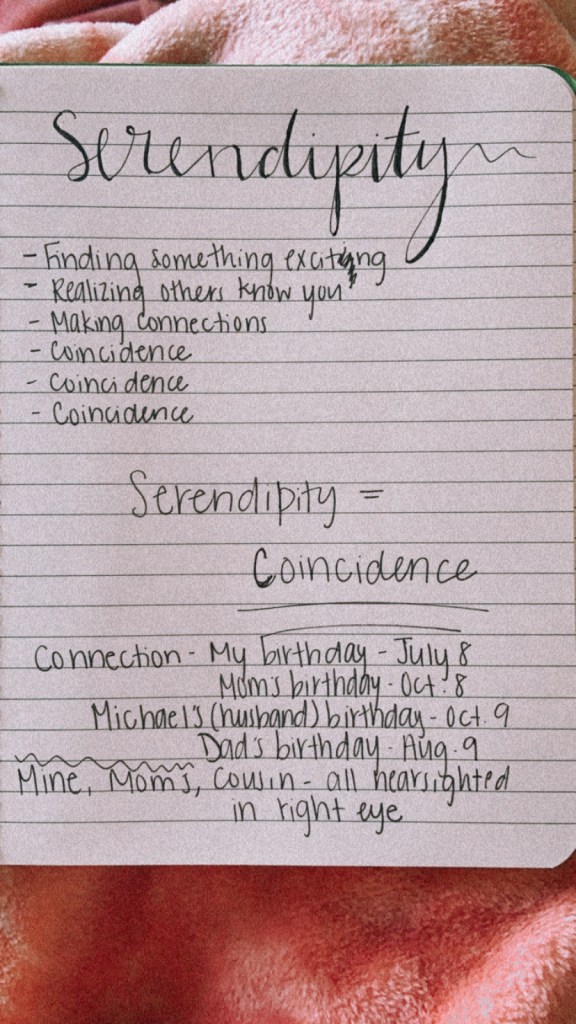
I am currently reading Textbook by Amy Krouse Rosenthal, which is such an incredible book and it is not your “normal” kind of book. Amy Krouse Rosenthal makes the reading fun and interesting. Each time I finish a page, I want to keep going and she what else she has to say. To me, it is like a writer’s notebook for her and I love feeling like I am in her mind.
In the book, she begins to write about the word Serendipity and what it means. Serendipity means realizing the connections you have with others, finding something exciting, and especially the coincidences. Coincidences is what she focused on the most when describing serendipity. I loved reading the serendipity moments she had and it made me think of a few I have myself. One of them being the way mine and my husband’s birthdays connect to my parents. My birthday is on July 8 and my mom’s is on October 8. My husband’s is on October 9 and my dad’s is on August 9. Another is me, my mom, and my cousin are all nearsighted in the same eye (the right) and have perfect vision in the other (the left).
Mentor Text
A mentor text is a text that can be referred back to when writing something similar to it. A book that is very helpful for finding a going deeper into what a mentor text is, is Mentor Texts: Teaching Writing Through Children’s Literature, K-6 by Lynne R. Dorfman and Rose Cappelli. In this book, they bring out the opportunities a mentor text can provide and how to find the right mentor text. This book also reminds me the importance of modeling. Everyone needs to see what something should look like before doing it themselves. This is the best way we can learn and know how to apply it to our own ideas. This reminds me of how much more I gained when my teachers have gone over what we were expected to do before we did it. It’s a great way to set expectations and to allow the others to know where they need to start. One quote I loved from Chapter 1 was, “To see themselves as writers, students need choice, opportunities to collaborate, venues for real-world publishing, and time for reflection.” I love this quote because all these steps are needed and are so important. Like they also added, reflection is often overlooked because some do not think it is important. However, reflection is so crucial because it lets writers look back at what they did. This can mean at what they think they loved and what they would like to add.
A Writer’s Statement… My Belief about the Teaching of Writing
Writing instruction should be fun and enjoyable for the student writers. However, I feel like now writing instruction has turned into a difficult task for students to complete and there is more focus being put on to the grammar and punctuation instead of the story itself. Thinking back to when I was in school and had to write, I remember getting my paper back and there being multiple marks from the teacher on it. Having this experience with writing made me feel like I was not going to be a good writer. As teachers, we need to show students how fun writing can be by allowing them to write what they would like and not focus so much on grammar and punctuation. We should focus on how they developed writing and what they included within their writing. We should help the students learn they are writers and help them see the potential they have. Writing is a way to express and learn more about themselves. Creating a writer’s notebook is a great way for students to feel motivated to write because they can look in it for multiple ideas to write about. The environment for a writer can be anywhere they feel comfortable and relaxed. It doe not have to be sitting at a hard desk in a brightly lit classroom. It can be on a couch, outside under a tree, and so many other places.
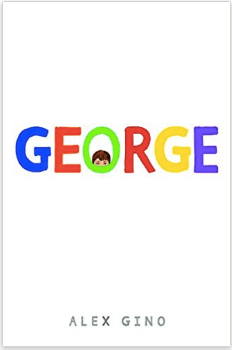
Georgeis about a student in the fourth grade who was assigned a male at birth, but wants to be a girl and feels like a girl. She would love to be called Melissa instead, but has to hide this identity because she does not know how others will feel when they find out who she wants to be. In class, they are reading Charlotte’s Weband the class will put on a play. She has the idea to try out for Charlotte because then people could see her for who she truly is, a girl. When she auditions for the part, the teacher assumes it is a joke and tells her that since she’s a “boy”, she would have to audition for Wilbur. She does not because she knows she is not a boy and decides that she will not be in the play. Her friend Kelly wanted to support George/Melissa, so they made a plan for how Melissa could show the world who she truly is.
I enjoyed this book and thought it gave much insight into what life is like for someone who is struggling to tell others who they are and having to hide their true identity. Two characters who I loved were Kelly and Scott. Kelly is Melissa best friend and when Melissa first told Kelly who she is, it took Kelly a few days to process it all. Once she did, she supported Melissa so well. Kelly helped Melissa in the play and was the first person to call George, Melissa. Scott is Melissa’s brother and when Melissa told Scott who she was, Scott was accepting and didn’t think too much more about it.
Melissa also had bullies she had to overcome and she had to learn how to tell her mother. These can be two very difficult things for anyone who is trying to become who they want to be. Melissa had to learn how to face her bullies and how to overcome them. She also had to find ways of telling her mother she was a girl. This was one thing she feared the most because she didn’t know what her mother would say. When her mother first brought it up, she did not seem open to the fact her son wanted to be a girl and could not understand. Soon, she realized who George truly wanted to be and became very supportive. I feel there are many parents who find it hard to accept this change and some never find a way to understand what their child would rather be. I am glad in this story Melissa’s mother became accepting of Melissa and her wants.
About the Author
Alex Gino is the author of George and uses the pronouns they, them, theirs. Alex is a huge activists and advocate for the LGBTQIA+ communities since 1997. Alex decided to write this book because it is a book they needed when they were younger. When Alex decided to come out, there were no books on transgender children and Alex knew something needed to be done about that. Alex did not only write this book for trans people, but also for people who are cisgender to better understand the feelings and thoughts of someone who is coming out and how to better support them.
This is a book I feel like teachers try to stray away from because of topic. However, I think it is something that needs to be talked more about in school because a lot of children are going through this and it is becoming more and more relevant. As teachers, we need to make our classrooms supportive of every student and we need to cover topics that could help our students feel more comfortable and/or how to support someone who is going through this change. Books are a great way to help students understand and are great for discussions. Discussions are how students can open up and talk about their feelings and thoughts. This can lead into activities such as writing and drawing what they understand about the LGBTQIA+ community.
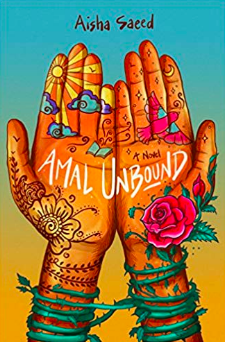
Questions answered by Aisha Saeed about Amal Unbound.
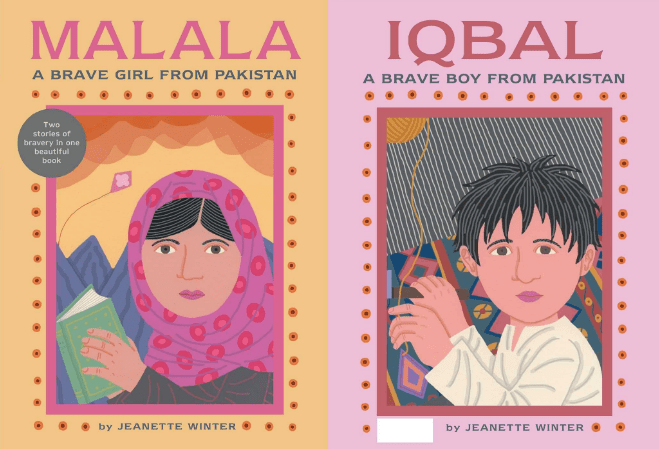
Malala: A Brave Girl From Pakistan, Iqbal: A Brave Boy From Pakistan
Connections Between Texts
I shared some connections in the Malala and Iqbal video about the themes I saw in Amal Unbound and Malala: A Brave Girl From Pakistan, Iqbal: A Brave Boy From Pakistan. Both show bravery, gender, education, and agency. I go more in depth on these themes in the vlogs.
Teaching Connections
There are so many discussions we can have with students, no matter the age, about these books and what they teach us. In chapter 5 of Reading to Make a Difference, there are many ways listed on how to have these different discussions with the grade levels listed. For the younger student (K-2), it is important to over any background knowledge they are going to need to know before reading the book. This can be through video clips, articles, pictures, other books, etc. For older elementary grade levels, the students can connect the characters in the book to other people they have learned about to compare and contrast how the characters are alike and different. I want to read both of these books in my future classroom and think it is very important for students to hear the brave acts these characters did. It would also give the students a sense of agency and know that they too can stand up for what they believe in. In my second vlog, I included other activities I would also like to incorporate with students. One was having the students write about something they would like to stand up for, what they would say, and how they would do it.


 Mrs. Thompson's Blog