Separate Is Never Equal and Can I Touch Your Hair?

Separate Is Never Equal
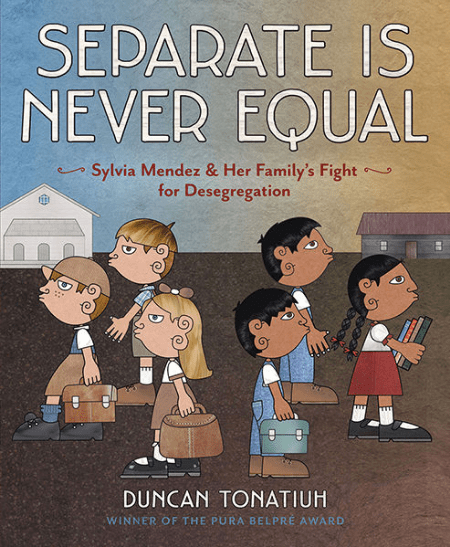
Separate Is Never Equal by Duncan Tonatiuh is about a court case Mendez v. Westminster and focuses the story around Sylvia Mendez’s perspective. The Mendez family had recently moved to Westminster in 1944 and when the three children were enrolling at the closest school, the secretary said they were not allow to attend the school and would need to attend the Mexican school. This made Sylvia’s family very upset and when her father spoke to others in the school system that have more control and they tell him the same, but do not give him a logical explanation of why they have to attend the other school. When Sylvia arrives to the Mexican school which is actually called Hoover Elementary, she recognizes the school is filthy, the halls are smaller, and they are located next to cow pasture. They also had to eat their lunch outside and flies would fly around or be on their food. Her family tried to start a petition but other Mexican families were too afraid to sign it. Later they heard of a lawyer, David Marcus, who has helped with situations like this before. The lawyer agreed to help and four more families decided to join in as well. David Marcus filed the lawsuit in 1945. When the school officials were called to the stand, each one was trying to give excuses as to why Mexican families could not attend the other schools. However, when the truth came out from the first official about how he thought Mexicans were too dirty and they lacked good social behavior, the Mendez family and other Mexican families were taken aback. One education specialist said, “Segregation tends to give an aura of inferiority. In order to have the people of the United States understand one another it is necessary for them to live together, and the public schools is the one mechanism where all the children of all the people go.” This quote stood out to me a lot because of the meaning it carries and how it counteracts all the ideas the more privilege White people had about mixing races in schools. The judge decided to desegregate the schools, but some officials did not like that and had another judge review it as well and he also ruled in the Mendez favor in 1947.

This book was very insightful for me because I have never heard about this case before and it is definitely one that more people should know about. The change and impact one family can make within a community to help benefit all is something more children need to read about. This would also be a great book for children to read since it’s written from the perspective of Sylvia. This case is very important in shaping how schools look like now in the United States compared to 1944. Many times we hear about the Brown v. Board of Education, but this one is justas important and relevant.

This video has interviews from Sylvia and others that are mentioned in Separate Is Never Equal.

Duncan Tonatiuh is the author and illustrator of Separate in Never Equal. He is was born in Mexico City and grew up in San Miguel de Allende, Mexico. I loved how Tonatiuh incorporated the mother saying her quotes in Spanish and then writing it in English next to it. As a reader, it allowed me to feel like I knew her mother better and to connect to the character as well. The artwork in this book was beautiful as well and in an article Tonatiuh says, “That is why my art is very geometric, my characters are always in profile, and their ears look a bit like the number three. My intention is to celebrate that ancient art and keep it alive.” (Counter Storytelling)

In an article by Elizabeth Marshall, she writes about graphic life writing. This refers to a life story through images and text within a picture book or comic. “Graphic life writing, then, arises as a powerful medium for representing diverse realities, for creating a culturally specific curriculum, and for exemplifying how to fight institutionalized racism.” (Counter Storytelling) This relates back to the framework of critical race theory (CRT) which helps analyze the stereotypes the author address about the characters and how the characters overcome these stereotypes.

These are the pictures I chose from Separate Is Never Equal to show where the author includes stereotypes and where the characters overcome it.
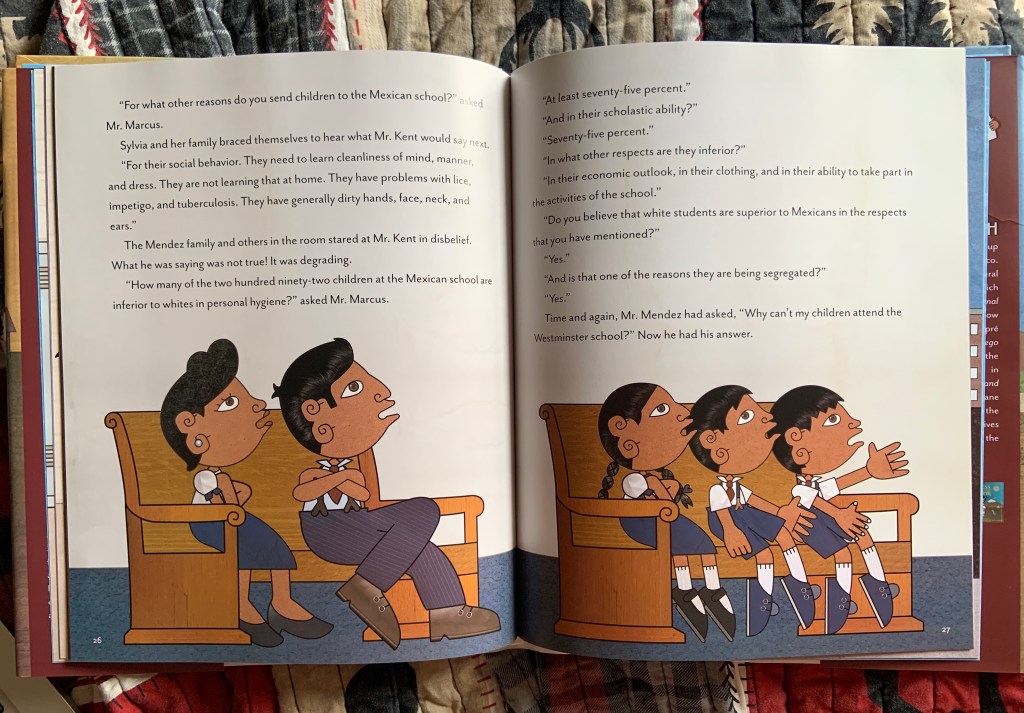
p. 26 & 27

I choose this picture as the stereotype because this is where Mr. Kent, the superintendent of the Garden Grove district, says that Mexicans do not have good social behavior, they are dirty, and believes that white students are superior to Mexicans. The Mendez family is struck by these words and have finally found the true answer of why they could not attend the white school. This view was from a white person who believed that they were than other races and deserved more. Separate Is Never Equal focuses on this topic a lot because that is the reason for this court case.
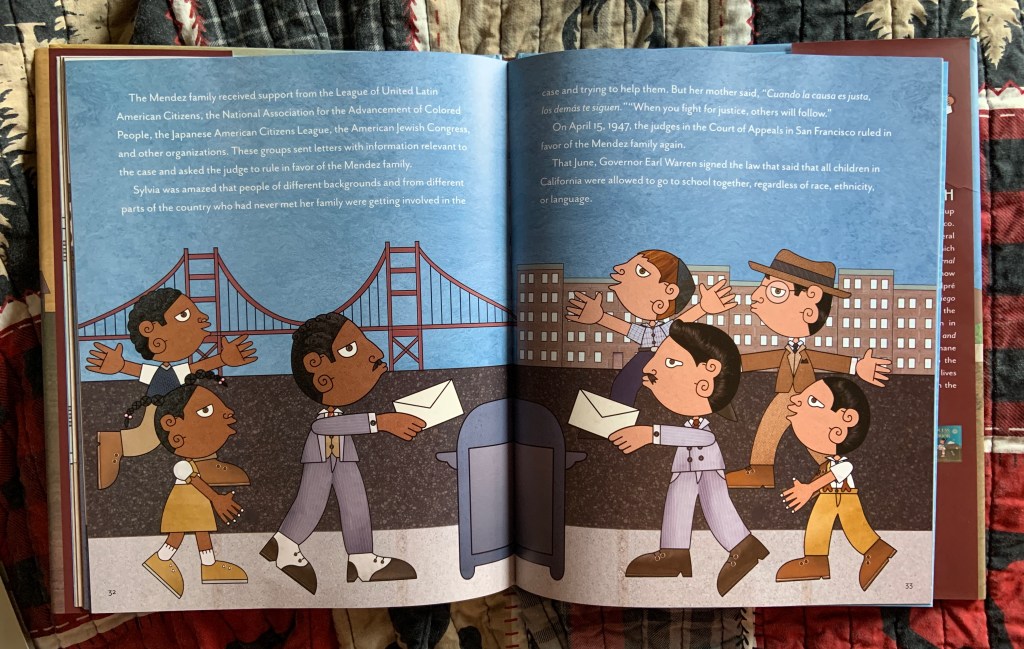
p. 32 & 33

I chose this print as the counter-storytelling because it shows different races and ethnicities coming together to fight for the greater good of the students. When the school board appealed the ruling, different organizations like the League of United Latin American Citizens, the National Association for the Advancement of Colored People, the Japanese American Citizen League, and the American Jewish Congress all supported the Mendez family. This layout demonstrates the power we can have for an issue when we all come together.

Duncan Tonatiuh’s website: http://www.duncantonatiuh.com/

Here are additional videos to go along with Separate Is Never Equal. One is about Sylvia Mendez and the other is an interview with Ruby Bridges.

Can I Touch Your Hair?
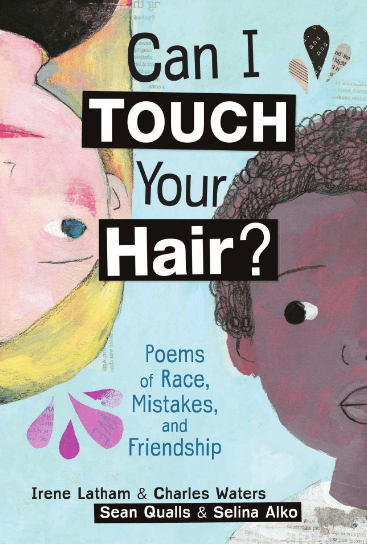
Can I Touch Your Hair? is written in poems and each poem brings a lot of meaning. The poems in the book are written from two different perspectives, a white girl and an African-American boy who are in the same class together and have to be one another’s partner. Throughout the book, the reader is being brought into each of the character’s worlds and how each one sees the world as the same or different for each topic discussed in the book. Their friendship also develops from not knowing/wanting to know one another to not being able to stop talking to each other in class. Can I Touch Your Hair? tells how poetry and sharing stories can bring others closer and create a meaningful friendship. At the end of the book, the two characters want to be partners for every project. This book demonstrates how even though two people may be two different races and have completely different experiences in life, they can still be friends and understand one another.

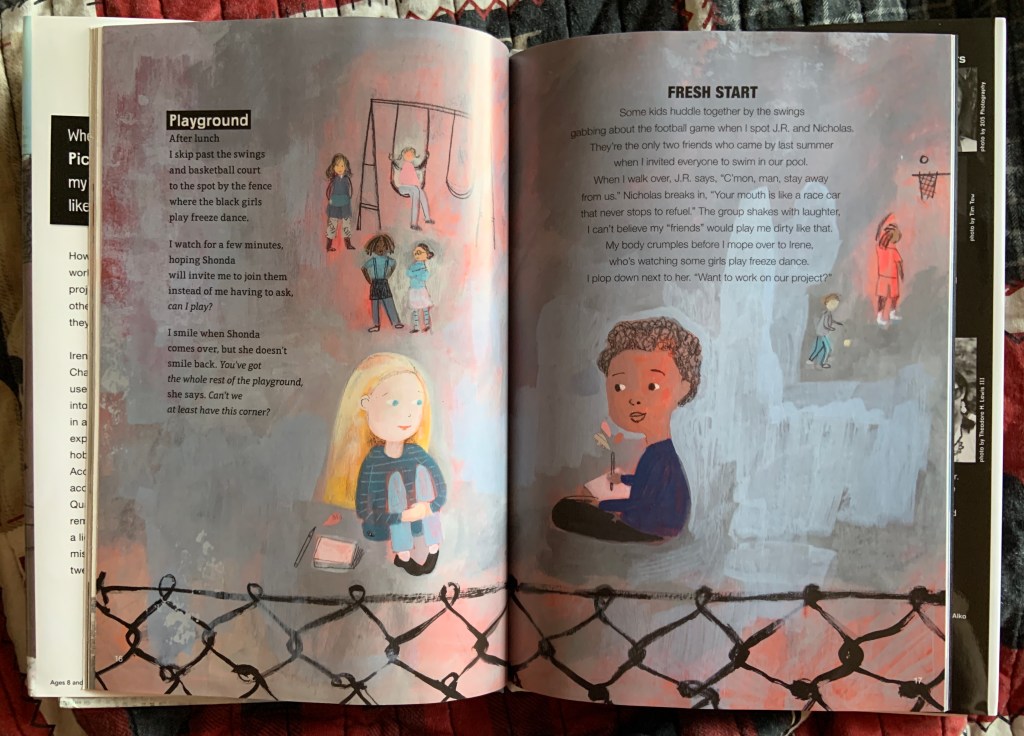
The authors did an amazing job creating these poems and how well the poems demonstrated two completely different lifestyles. There were also many issues that are still being faced in the world today that are in incorporated into the poems like race and stereotypes. The illustrators also did a fantastic job creating the illustrations in the book. One of my favorite is when the girl and the boy are talking to one another in class on page 35 and the illustrators chose to have flowers bloom from their mouths. The poem is also called “Blooming Flowers” and the illustration represents the title well.

This book is based off of the authors relationship. The authors are Irene Latham and Charles Waters. In fifth grade these two became acquainted with one another through Poetry Fridays their school did online, Irene lived in Louisiana and Charles lived in Pennsylvania. Each poem is based on their lives and experiences and now the two are life-long friends. There are also two illustrators, Sean Qualls and Selina Alko. They are married to one another and live in Brooklyn, NY with their two children. Both have illustrated many books and Qualls has won a Coretta Scott King Illustrator Honor for Before John Was a Jazz Giant.

Can I Touch Your Hair? can be used as a counter narrative which means it uses authentic voices that critique cultural assumptions. Irene and Charles both have voices that can break apart the cultural assumptions given to them. A few are, Irene wanted an afro when she was younger and was laughed at; Charles is not the greatest at basketball, but loves to read; Irene wants to play with the black girls on the playground, but they don’t want her to; and when Charles got help from the police officer when he got stuck on the chain-link-fence. All of these are examples of breaking stereotypes. Some people think that because someone is white they should not have an afro, because someone is black they should not be good at doing schoolwork, because people are two races they should not play together, because someone is black hopping over a fence they are up to no good. This book breaks those stereotypes to demonstrate just because someone is a certain race, does not mean they should not be able to do something someone else is doing.
Author and Illustrator Websites

Irene Latham: https://www.irenelatham.com/

Charles Waters: https://www.charleswaterspoetry.com/

Sean Qualls: https://www.seanqualls.com/

Selina Alko: https://www.selinaalko.com/

Teacher Application

These two books would be great to introduce the topics of race, social justice, overcoming, and breaking down stereotypes. Students need to be made aware of the issues that are going on around them and how it affects many people. They also need to see that these issues are still happening today and to gain better understanding of what they could do to help end these issues. Some discussion questions that can be used to help guide the students to think more about a topic. These are from Tara Yosso (2005) in the Marshall article (2016).

How does the subject of this auto/biography maintain hopes and dreams in the face of barriers?

How do the illustrator and/or author communicate their story in images and words?

Does the author include or write in more than one language or dialect? Are certain literary forms used in the book, such as parables or poems? 

What knowledge or lessons do young people in these auto/biographies use that come from their families and/or communities? 

What documents, photos, or information do the author and/or illustrator include in their life writing? Why?

Upon what networks of people in the community do the author and/or illustrator rely?

How do youth navigate through institutions like the school that are not set up for communities of color and/or Indigenous peoples?

In what ways (e.g., challenging adults, participating in protests, testifying in court) do youth resist unfair treatment or discrimination?
The Parker Inheritance

The Parker Inheritance

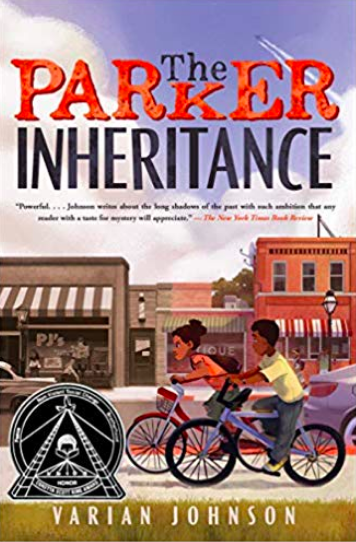
The Parker Inheritance by Varian Johnson was a page-turner from the start. There is a “puzzle piece” mystery that is waiting to be solved in the town of Lambert, South Carolina. The mystery will lead to a great fortune of money and reveal the identity of the person behind the fortune. The clues are within a letter that was given to four people, one being Abigail Caldwell. When the rest of the town thought it was a hoax and Abigail lost her job because of it, she left the letter for her granddaughter, Candice to find and hopefully solve. When Candice returns to Lambert, she meets a friend, Brandon and finds the letter that changes their lives forever. They also begin to dig up the historical past of Lambert and all of it’s secrets while trying to find the fortune. One was a family called the Washington’s who were kicked out in the 1950’s. This book also discusses racial issues and the stereotypes that come along with race, hiding behind identities, sexuality, family structures, bullying, and the importance of being with the ones you love. One quote from “Culturally Diverse Literature” states,”Teachers need more books that depict diverse lifestyles, opportunities, beliefs, choices, and worldviews in addition to books that focus on the status quo.” This book is one of those books and it makes the reader think about different lives and how their views of the world could be different from others.

Check out this link to learn more about the story behind The Parker Inheritance: http://varianjohnson.com/books/the-parker-inheritance/story-behind-parker-inheritance/

“Just because you don’t see the path doesn’t mean it’s not there.”

Themes

There were many themes in The Parker Inheritance. These were racial issues, hiding behind an identity, sexuality, family structures, bullying, and being loved/finding friendship. In the book, as Candice and Brandon were finding clues about the hidden fortune, they also found out about a part of the historical background of Lambert. They found out there was a family, the Washington’s, who were forced out of Lambert mostly because of their skin color in the 1950s. Racial tensions were already high then and Big Dub (Enoch), the father, wanted to challenge the all-white tennis team to a tennis match against his all-black team. Reminder schools in South Carolina were still segregated at the time so these two teams came from two different schools. The game was private and Big Dub’s team won fair and square. However, not every white person saw it as that because of the skin color and jumped and beat Big Dub and one of the players on the team, Reggie. They also threatened to hurt Siobhan, Big Dub’s daughter, if they were to see her. Big Dub knew that they had to leave so they did. Reggie also left, but went different ways. Flash forward to 2018 when Candice and Brandon, who are black, were looking up facts and clues to find the fortune. They were at a school that contained a memorial for Perkins High School, the old all black school. When they were leaving, Brandon realized he forgot his phone and they were knocking to get back into the school. The principal of the new high school was white and thought Candice and Brandon were up to no good because of their skin color and thought they were trying to steal because they had documents and yearbooks in their hands from the memorial room. The principal found out right after that, they were fine and acted like everything was okay an brushed off what had just happened. Another example is Brandon’s sister, Tori. Tori drove Candice and Brandon around when they needed her too, but whenever she drove she was always nervous about a cop pulling her over. This is because of how people who are black are treated and they are not given as much benefit of the doubt. Each of these examples demonstrates how much racial issues are still happening and the book did an amazing job bringing it to light even more.

Hiding behind another identity was also a theme in this book shown by Reginald ‘Reggie’ Bradley a.k.a James Parker and Candice’s father. Reggie is half white and half black and when Reggie had to leave Lambert, Coach Douglas saw it as a way for Reggie to start over and have a new identity as a white person. For Reggie this was hard to grasp because even though he is mixed, he has always seen himself in the black community. Coach Douglas talks him into changing his name, James Parker is what Reggie decides, and to act like he is white. Coach Douglas also makes up a reason for Reggie’s death. As Reggie begins his new life, things are different for him and he can recognize the new ways he is being treated because people think he is white and he was able to . Reggie has always kept a tab on Siobhan, his girlfriend from high school, and he wants to see her again. When he finds her and they start to talk, Siobhan can tell there is a difference of how he acts now and she does not like it. He realizes what he has done and wants to fix it for her. Later, after Siobhan dies, Reggie wants to go back to Reggie. He was tired of being someone else and sold his company and decided to turn his fortune into a mystery for someone to solve. Candice’s dad also faced hiding behind an identity. He didn’t change his name or anything like that, but he was hiding his true self from Candice. He did not want to tell her about his new interest in who he is dating. When he told Candice about his new life and his new boyfriend and how they have to hide it at work since he works in construction and explains how the men at work are not for/in support of gay men and have said things before bout it.

“In some ways, her father was like Reggie Bradley. He got everything he wanted, but at a horrible price. He had to hide his real self.”

Sexuality was discussed about Brandon’s friend, Quincey, and Candice’s dad. Both of these characters are gay and are trying to deal with the challenges those in the world are giving them. For Quincey, he was being bullied at school because of his sexual preferences and had to leave for the summer because of how bad it was getting. Candice’s dad could no longer feel like himself at work and worried what others thought about him. Since Brandon is Quincey’s friend, Brandon was also bullied and called gay by some of the boys in school. This book did well incorporating this in because it is not something that is mentioned in many books. Brandon had brought up the idea for creating a community center for the LGBTQIA community. A place where they could just be themselves and enjoy being around one another. Candice loved the idea and they decided to put some of the money of the inheritance towards the community center.

Bullying was not only related to someone being gay in this book, but also related to how someone acted. Brandon was bullied by a few boys who lived in his neighborhood. They did tease him and call him gay, but they also bullied him because of how much he loved to read. When him and Candice first meet, they go to the library together and he makes the statement that he only reads boy books. This is because he is already putting up walls because of how others have teased him in he past. Come to find out, he loves almost any book and him and Candice trade off “boy” and “girl” books and they also love puzzle books. Brandon is also seen as a nerd that would not be good at sports, but later in the book Candice sees him playing basketball and he’s actually really good. He’s just been put down by others for so long that he doesn’t want to play with others except his friends.

Family structures are also shown differently in The Parker Inheritance. The family that Candice now has are divorced parents which is still something she is getting used to. Brandon’s family consists of his single mother and sister. It seems that his dad has not been in the picture for a while and Tori mentions that she does not like her dad and wants nothing to do with him. Another family that we see is the Washington’s who have a mother, father, and child alls still together, but after they move, Leanne (the mother and wife) becomes more of the dominant force and joins into the new community.

This book touched a lot on being around the ones you love and creating friendships. This was shown throughout the book and repeated by Reggie a few times about being around the ones you love. This book shows the importance of this statement and how we need to have people around us who love and support us for who we are not someone we are trying to be. Reggie realized this later in life, but once he did he did everything in his power to spend as much time with Siobhan has he could before she passed away. Candice and Brandon created a friendship that would live on for years and it showed how important their friendship is to one another especially when they saw each other again three months after they found the inheritance.

Teaching Connections

There are different topics this book could bring up in the classroom and that are still strong topics in our society today. It’s important for students to be exposed to this information and to be able to discuss and write about these topics and what their input about each one. They could even draw a picture of what they think. Too many times, these topics are push aside in classrooms because of how in depth or how “touchy” it could be. The truth is there are probably students in the classroom that are still facing these topics every day and never discuss them or at least try to. It’s crucial that as teachers, we incorporate these books into our classroom. A quote from “Culturally Diverse Literature” states, “… if children never see themselves in books, they receive the subtle messages that they are not important enough to appear in books and that books are not for them. Conversely, if children see only themselves in the books they read, they come to the conclusion that those who are different from them are not worthy of appearing in books.” This is a quote all teachers need to take with them into the classroom and when deciding on what books they should read and have the students read.

Connected Texts

It’s important for students to see text that can be connected to one another so they can see it in many examples. Texts can include multi-media text (videos, songs, etc.), posters, pictures, speeches, other books, and other documents. Having these different texts allows the students to see the information in different ways and can lead to great discussions. One example could be this video describing the “Erase the Hate” campaign.

Freedom Over Me and Persona Poem

Freedom Over Me

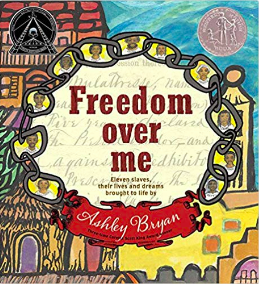
Freedom Over Me tells the story of eleven slaves from their point of view. Ashley Bryan has taken a collection of slave-related documents from the 1820s to the 1860s. He then decided to write about eleven slaves that were for sale on the Fairchild’s Appraisement. He gave these eleven slaves a voice and shared the dreams he thought they would have. The stories are written in free verse to emphasize the characters’ words. Bryan wanted the slaves to be seen as human beings because they are and deserve to be seen that way. He gave each an age and a job on the estate. This book opened my eyes to how slaves lived their lives and how they felt. It tugged at my heart many times to read what they feared and what they may lose when being sold. Bryan did a fantastic job at bringing these eleven slaves to life.

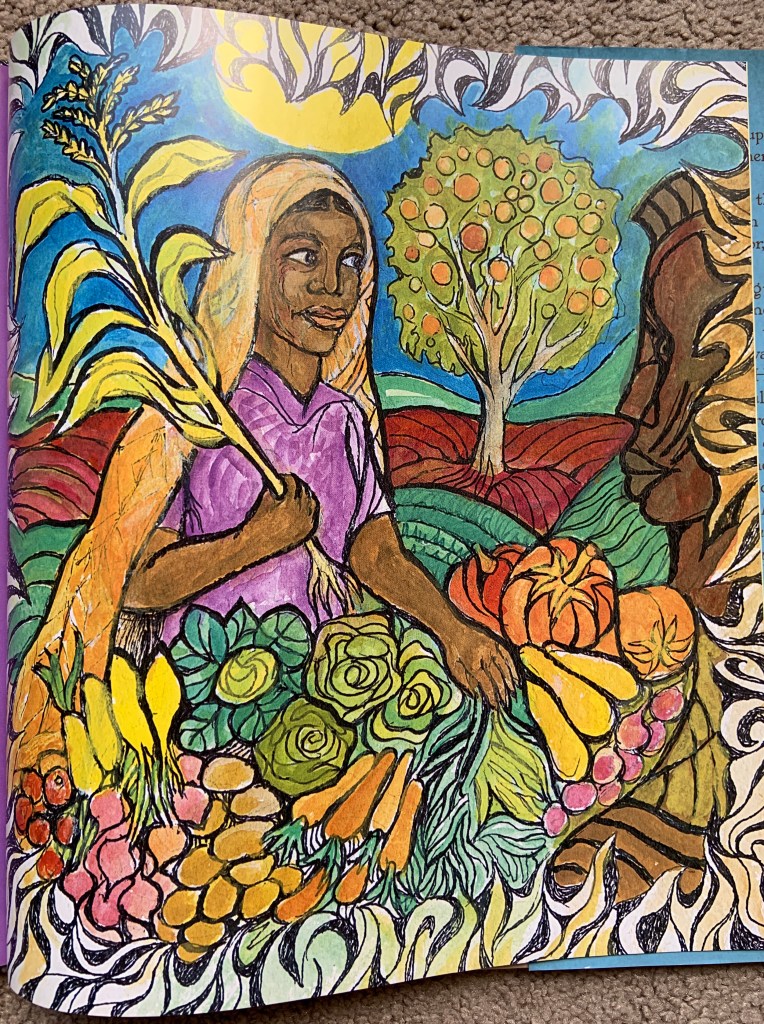
The illustrations in this book bring the characters even more to life. The way Bryan drew/painted the illustrations and features of each character, gave more depth and story to that character. This picture is of Betty, 36 and $150, and is shown on her dreams page. This picture is beautiful and it allows the reader to see Betty more than a slave for sale. But as a human being who has hopes and desires for her life. Bryan does this with every character in the book and allows the reader to connect and understand the characters.

One book that would go great with Freedom Over Me is Freedom in Congo Square by Carole Boston Weatherford. Freedom in Congo Square tells the importance of this historical location located in New Orleans. Congo Square is where slaves could go on Sunday’s to socialize with one another, practice their African religious beliefs, buy and sale goods, and play African songs. Congo Square is where the slaves felt free and were able to be themselves. These two books could be read together and the class could discuss what is something new they learned from the books and what were some of the jobs the slaves shared in the two books.

A Crack in the Sea Persona Poem

Venus

I am different and courageous
I live in a cave with a statue in a place of solid ground, Tathenland
I wonder about my past and where I’m from
I hear the voices of those I have led
I see the door that led me and the others to a safer world
I want to remember everything that has happened to me
I am nervous about recalling my memories
I am different, courageous, a leader, and caring

I question if I should have taken on more leadership with Swimmer
I feel I could have done more
I taste the water in the nearby bay I have walked in
I worry about what I may remember from my past
I excel at creating my own path in life and helping others
I understand that my actions were meaningful
I am different, courageous, independent, and hopeful

I say good-bye and good luck
I believe people can become better versions of themselves
I dream this world will continue to be good
I try to help the Kraken find his wife
I hope Ren can come back and do good in the world
I was once bold and strong
But now I am old and must go
I am different and courageous

What’s a Persona Poem?

A persona poem is a poem written by the reader about one of the characters in the book written in first person. A persona poem helps the reader develop better understanding of the character and develop empathetic responses. Writing a persona poem can help the reader make the transition of moving through the “sliding glass door” because the persona poem acts as a “wardrobe” (Frye, Hardin, Bouwman, and Stumb, 2018). In an earlier blog post, I wrote about how books can act as a mirror, a window, or a sliding glass door. sometimes, it is difficult for readers to make the transition through a sliding glass door into a whole new world/perspective. With the help of a persona poem, the reader can make the transition easier while developing a better understanding of the character in the book.

A Crack in the Sea and Dreamers

Both of these books carry so much meaning. They are both about families who are adapting to new lives/worlds and trying to find their way in it. Many of the characters were refugees or immigrants that so much bravery when life gives them many obstacles.

A Crack in the Sea

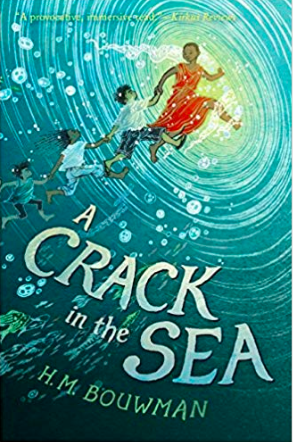
A Crack in the Sea is by far one of my favorite books I have ever read. The plot, the characters, and the illustrations are just amazing. This book follows the story of many different characters such as Pip, Kinchen, Caeser, the Raft King, Venus, Swimmer, Thanh, Sang, Mai, and so many more. Each story plays an important role and eventually are all tied to one another. This books dives into fantasy and history and H.M. Bouwman does a fantastic job balancing them both out. Some of the themes that I noticed from this book are being parentless or orphans, immigration, breaking gender roles, and family separation.

“The urge to go up. This was the spot, right here. Right now. She couldn’t explain – she just felt as if she must go up into the storm. As if there were a door standing open…”

The setting of this book takes place in a place called the “second world”. This world was founded by Venus when trying to save the refugees and helping them find a new home. In the second world there is multiple islands grouped together called Tathenn and a place called Raftworld that is led by the Raft King. The “first world” in the book refers to the world that we, the readers, live in. The second world, in my opinion, is better than the first world. People in the second world have powers that are heightened like being able to communicate to fish, being able to walk at the bottom of the ocean, being a storyteller, and being able to walk on the water. Each character who has a power are able to learn more and more about it when they are in the second world and how to use it wisely and more meaningfully. The second world is also a place where people feel safe and can live freely, listen to stories about their past, and can call home. Whereas the fist world is filled with war and families are trying to escape or were being sold as property. The characters Thanh and Sang are brother and sister and lived in Vietnam. A war was happening they were escaping with some of their adopted family in hopes of finding a refugee camp where they could live and be away from the war. During their journey, many terrible situations occurred like them starving and thirsty and Uncle Hang being stabbed by pirates. When they arrived to the second world, they were able to drink from the sea water and they found safety. Here, Thanh and Sang found their new home.

Each character played an essential role in the story, but two characters that intrigued me the most were Pip and Venus. Pip, in the beginning, was afraid to talk to people because he sister, Kinchen, had told him he may look stupid if he can’t recognize someone’s face or because he is very different from others on the island that others may think he is weird. When he was taken by the Raft King, he had to learn how to be on his own and make his own decisions of how he wanted to talk and interact with others. This is when Pip really took on stronger leadership roles and made a friend in Jupiter, the storyteller who live in Raftworld. He used his power of communicating with fish towards the better good and he developed a stronger sense of empathy throughout the book. When Thanh had to say goodbye to his friend, Mai, Pip told him how he was sorry that Mai wanted to leave and how he wished that people never had to be split apart. Venus was another favorite of mine because of what she stood for and for her acts of bravery. He stood up for the greater good of the people and was determined to save the refugees from the boat. She led to shelter and tried to take care of them the best she could. She also broke boundaries like leaving Raftworld to experience life on Tathenland. This was not like others, but she wanted to live her life on land.

Dreamers

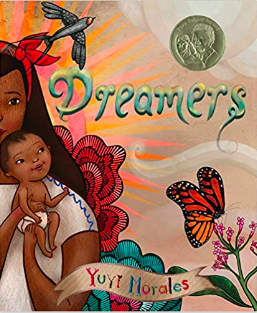
This book is about a mother and her child as immigrants coming to America. The language, the words, the sights were all different from where they came from, Mexico. The mother was very brave and took a risk of coming to America in hopes to give her child a new and better life. One day they happened to come upon a library which changed their lives forever. They learned to read the books that became such a huge impact in their lives.

“Books became our language. Books became our home. Books became our lives. We learned to read, to speak, to write, and to make our voices heard.”

Yiyi Morales, the author and illustrator, wrote where this story came from. It was based on her life and bringing her two-month-old son, Kelly to America with her. This is an #OwnVoices story because it is based off of her life and her experiences.

Connections Between Stories

A Crack in the Sea and Dreamers introduce the reader to people who are immigrants or refugees who face many different challenges and demonstrate much bravery. The families in each story were refugees or immigrants or trying to help refugees or immigrants. Each character in both books demonstrated an act of bravery. Both stories takes the readers deeper into what it means to be an immigrant or a refugee and how life looks different for each person.

Teaching Application

Both of these books would be great to use in the classroom. There will be students in my future classroom that have or know someone who is an immigrant or a refugee. Also, I want my students to learn more about what it means to be an immigrant and how much bravery it takes to come into a whole new place and have to start/learn all over again. I think it would be a great idea to have a class discussion on how they think the characters feel and how they would feel if they had experienced life like that. Another idea for A Crack in the Sea would be to have a timeline where the students can write down what happened and for them to have a character chart to write details about each character. This would give them something to look back on if they cannot remember a character or when an event took place.

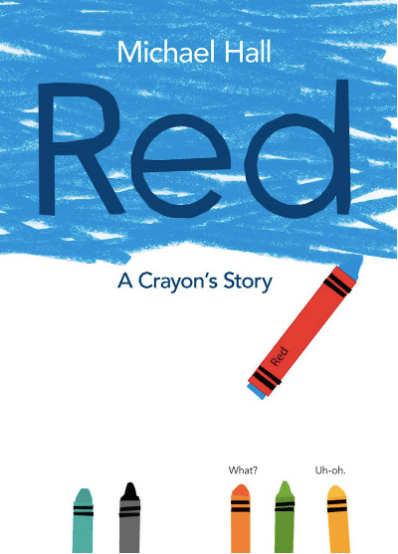
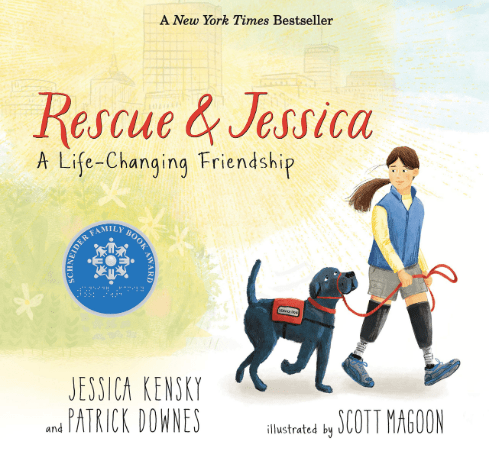
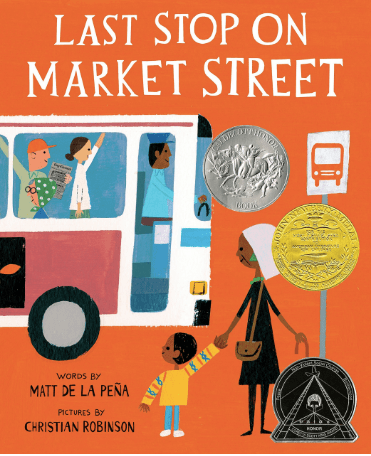
Red: A Crayon’s Story, Rescue and Jessica: A Life-Changing Friendship, and Last Stop on Market Street

Each of these stories focuses on a person or a crayon that is different from others. The stories give us insight into another life and how theirs is different or similar to ours. These books remind me of the metaphors of a mirror, a window, and a sliding glass door. A mirror is a story that reflects your own life and you see yourself. A window is when you get the opportunity to look into someone else’s life. A sliding glass door is when you get the chance to step into a whole new world and experience a life completely different than your own.

Red: A Crayon’s Story

Red: A Crayon’s Story demonstrates how society usually assumes who we are based on what we look like on the outside or trying to conform us into something we are not. This book focuses on a crayon that is labeled red and expected to draw in the color red, but is actually a blue crayon. I feel like this applies to numerous people and students in classrooms now. This book also makes the setting a classroom which makes things feel even more realistic.

There were many themes that were in this book which are labeling, finding ones self, and finding acceptance. Throughout this whole book, the blue crayon had the label of being red and was expected by his teacher, mother, grandparents, and peers to draw in the color red. When he did not do this, he was given ideas of how to better become red. He was partnered with others crayons, was told to draw pictures of things that are red (strawberries, cherries, hearts), and other tools tried to help him (tape him together, sharpen him, cut a snip in his label for it being too tight). Until eventually a different crayon asked him to draw an ocean. When he colored the ocean, his friend, Berry, had him realize he is blue. Once he found he was blue, he continued to color all things blue and everyone started to talk and calling him brilliant or saying he is reaching for the sky. This also relates to how he found his true self and his true color. So many times, students get labeled and are seen as that and are expected to do nothing more or nothing less than that. Being able to find who someone truly is can uncover a lot more talent than others think they have. He also finally found acceptance. For a long time, everyone was telling him he was different and not doing what he was supposed to do. Once he found who he was, he was finally accepted by others and accepted who he was too and was proud of it.

I think it is very interesting how this story took place within a classroom because it is a very true experience for many students within a classroom. They get labels like they are a bad students, not smart enough, need extra support, the list could go on and on. This labels can carry on throughout the school year without given the chance to break those labels. As teachers, we have to remember that a student should not be given a label because they should be given the opportunity to break those labels that have been given to them and not feel constricted to one thing.

Rescue & Jessica: A Life-Changing Friendship

Rescue & Jessica: A Life-Changing Friendship is based on a true story where a girl, Jessica, who becomes a double amputee due to the Boston Marathon bombing and has to learn how to do life with extra support from a service dog, Rescue. In the book, they both realize they both needed each other. They learned how to do everything together and how to rely on one another. I have always known how important it is to have service dogs, but this book made me realize even more why service dogs are so special.

The themes that were shown in this book are physical disability, caring for one another, and taking on new responsibilities. Physical disability played a huge role in this book and is something that is not portrayed in a lot of children’s book. Jessica had to learn how to live her life with this new physical disability that she thought she would never have to face. When she met a service dog in the beginning, she realized how much she needed one herself. She was given Rescue as her service dog and they relied heavily onto one another. Each had to care for one another. Rescue had to help Jessica when she needed something or was trying to accomplish something that she couldn’t. Rescue also comforted Jessica when she was felling down or discouraged. Jessica had to take care of Rescue such as feeding him, playing with him, and comforting him. This also relates to the theme of taking on new responsibilities. Both Rescue and Jessica were expected to have to take on new responsibilities like Rescue taking care of Jessica and Jessica being able to perform and work towards using her new legs.

This book reminds me a lot of an #OwnVoices book. Both authors were challenged with this new perspective and lifestyle. Both became amputees due to the Boston Marathon bombing. This book was very personal for both and they both poured their thoughts and emotions into this book. Although, Jessica (in real life) was an adult when she became a double amputee, her story and emotions are the same. This book let them voice their life and show it in a way for everyone to understand. Jessica, Patrick, and Rescue’s story was demonstrated very well in this book.

This link provides more information about Rescue and Jessica and an interview with Jessica and Patrick about how Rescue has helped tremendously. https://www.wbur.org/artery/2018/04/11/rescue-and-jessica

Last Stop on Market Street

Last Stop on Market Street is about a boy, CJ, who views his life differently than those he is around most often. In this book, we meet CJ and his grandmother, Nana. Throughout, he asks questions to his grandmother like why do they have to ride the bus, why doesn’t he have a device to listen to music on, and why they have to go to go to a certain place after church. To him, it didn’t make sense that he had to do these things, but other students at his school or people he saw out and about could go home in a car or could listen to music on devices. As their journey continues, they end up at a soup kitchen to serve meals to others. This book demonstrates how people can live their lives so differently and gives real-life examples of what they could be.

The themes shared in this book are building community, finding beauty in unlikely places, and the value of helping others. Building community is found from the beginning to the end of this book. From the relationships that are made on the bus to the relationships that are made in the soup kitchen. Nana is teaching CJ the importance of community and showing him that having a community is essential. Throughout the book, CJ seems to find the bad in many situations or cannot see a brighter side to not living a certain way. However, Nana finds the good in everything. The first example shown is when they are waiting for the bus to come and CJ asks why they don’t have a car and his Nana replies why do they need a car when there is a bus who has Mr. Dennis as the bus driver who does magic tricks. Another is when he sees others who are listening to music on a device and says he wishes he had one. His Nana responded with why would you want one when you have live music right here. She was referring to a man who had a guitar on the bus and he began to play. To CJ, he didn’t think these little things could be so beautiful in the long run, but with Nana’s help, he saw the beauty. The last is the value of helping others. At the end of the book, we see CJ and Nana in the soup kitchen serving others food. The picture that is shown is very impactful and shows a community coming together. CJ is learning at a young age the importance of helping others and how it makes him feel. When they arrive outside the soup kitchen, CJ tells Nana he is glad they came. Reading this makes the reader realize CJ is gradually understanding the value in helping others, but also seeing beauty in what is being done.

Connections Between Books

Each of these books represents a mirror, a window, or a sliding glass door for all readers. Each one represents a different lifestyle and how each plays an important role in society and the way people think about others. The books focus on one individual who experiences life differently than those around them. For Red, he was mislabeled, but others expected him to be red without thinking he could be something different. For Jessica, she was a double amputee and had to learn how to live her life with two new legs and with a service dog. For CJ, he did not understand why his life looked different than other people he knew or saw like riding the bus or going to the soup kitchen.

Each book dives deeper into understanding what/how other lifestyles can differ from one another and how everyone has a different perspective. Also, each book focuses on a child like Red, Jessica, and CJ which can be very impactful for other children who read these books because it is a book about someone that may be around their age or share an experience. The books also give the child a companion who helps them see life in better ways. Red met Berry later on who helped him recognize he was blue, Jessica was given Rescue to help with daily activities and to comfort her, and CJ had Nana who helped him see the beauty in the world and teach him the value of community. Each book demonstrates how different types of relationships are so meaningful to have.

Teaching Connections

There are so many ways to incorporate these books into the classroom. When I was growing up, books like these were not read to me often in the classroom. I think it is essential for students to be able to hear these stories and see how others live their lives and what kind of impact it has on them. I also think students could relate to the characters in the books and make connections to the characters. The students would also have the opportunity to discuss with their classmates how the books made them feel and we could talk about the importance of each one.

One of the strategies that stood out to me from the Chapter 2 Teaching Critical Literacy from Critical Literacy : Enhancing Students’ Comprehension of Text was the Connection Stems strategy. This strategy allows the students to make connections within the book and to their lives. When they have completed their Connection Stem, they get the opportunity to share with others and use text evidence and personal experiences to explain the connections. I also love the examples of the Connection Stems and how students can begin their explanations. Examples: “That reminds me of…” “I remember when…” “An experience I have had like that …” Having these discussions in class can help build upon our classroom community and be able to open up to one another.

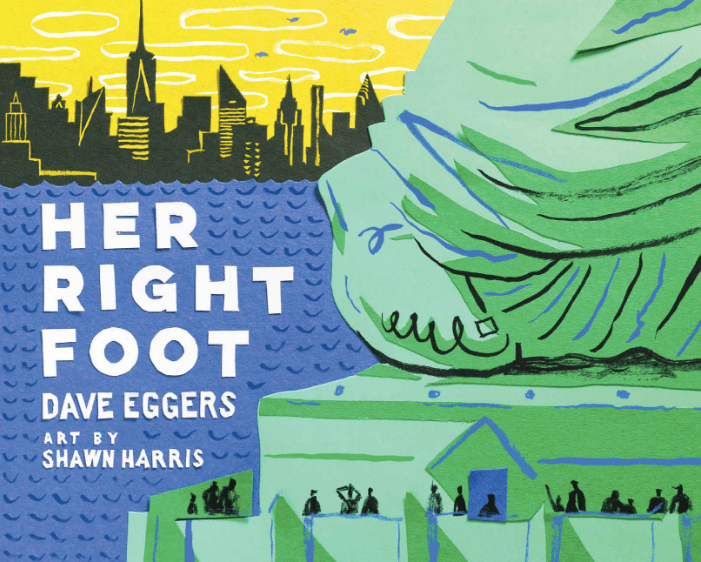
Her Right Foot, My Two Blankets, and Wishtree

The books Her Right Foot, My Two Blankets, and Wishtree each carry the same theme throughout and deepen the thought of what immigration is and the feelings of those who are immigrants. Each book demonstrates the importance of community and building relationships.

Her Right Foot

Her Right Foot was very interesting and enlightening. It taught me so much about the Statue of Liberty and the back story of where she came from and what the right foot meant. The way Dave Eggers presents the meaning of the right foot and how the Statue of Liberty is an immigrant herself was very impactful.

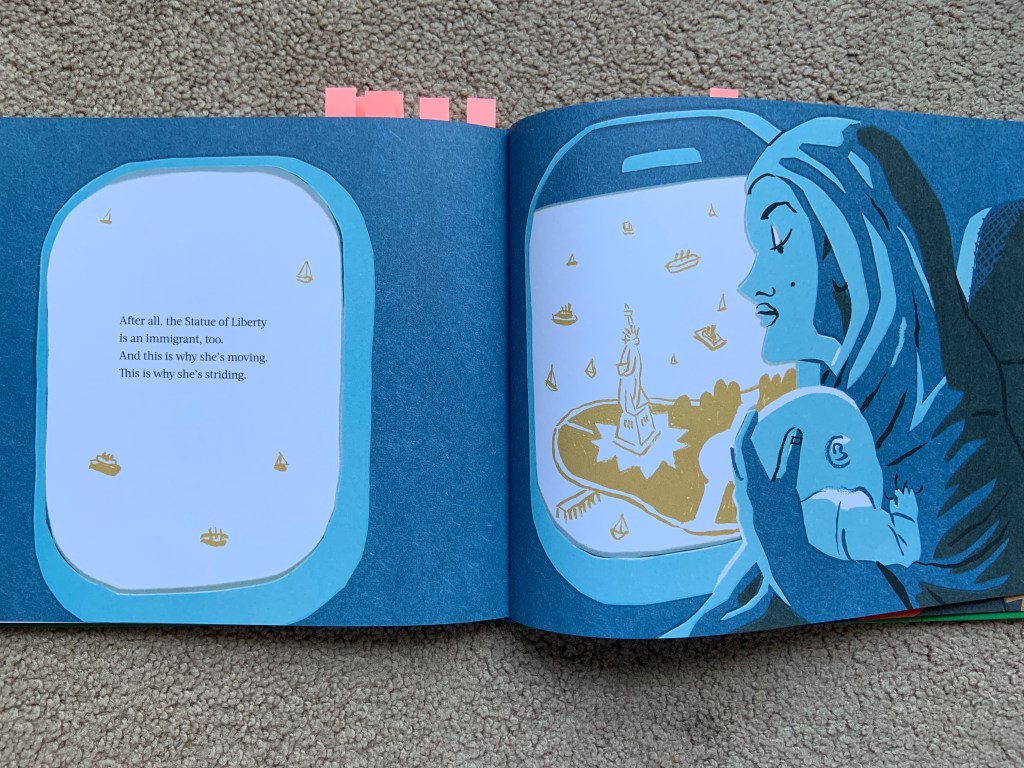
This spread from Her Right Foot truly captures the meaning of the book and what Eggers wanted the reader to learn. I never thought of the Statue of Liberty as being an immigrant, but after reading this book, I can see how she is. She was created and built in an entire different country and then was brought to America to stand and welcome the other immigrants just like herself. This spread also shows an immigrant mother and child being welcoming into America by the Statue of Liberty which is so important for this book to include since the main point is demonstrating how the Statue of Liberty is an immigrant.

This book included many facts like where the Statue of Liberty was built and who had the idea to build her. It also mentioned what the Statue of Liberty was made out of and why her color changed from brown to green over the years due to the sun. It also covered every detail about the statue like how her crown has seven spikes to represent the seven seas, seven continents, and the sun’s rays. It also included the meaning of the torch, how Thomas Edison wanted to include a speaker inside of the Statue of Liberty, and how Eiffel (who would later build the Eiffel Tower, built the interior of the Statue of Liberty . All of these facts were so interesting to learn about and to kids I can only imagine how fun it would be for them to learn these facts as well.

A few themes I found for her Right Foot was immigration, welcoming of others, and finding acceptance. The main theme of this book was immigration and the welcoming of immigrants. This is a huge topic in America right now that is being heavily debated on. When reading this book, there were so many pictures that were shown that represent each ethnicity that come to America to find refuge or to begin a better life. By incorporating how the Statue of Liberty is an immigrant herself shows how America was truly built around immigration and how essential it is for Americans to welcome immigrants into the U.S. The theme of finding acceptance comes from the views of immigrants. Many, if not all, immigrants come to America to start a new life and it can be hard to do if they do not feel accepted by those around them. This issue is still happening all around us today and many immigrants are being turned away or not feeling accepted by their community. This book exhibits how crucial it is to accept others regardless of the person’s background or ethnicity.

My Two Blankets

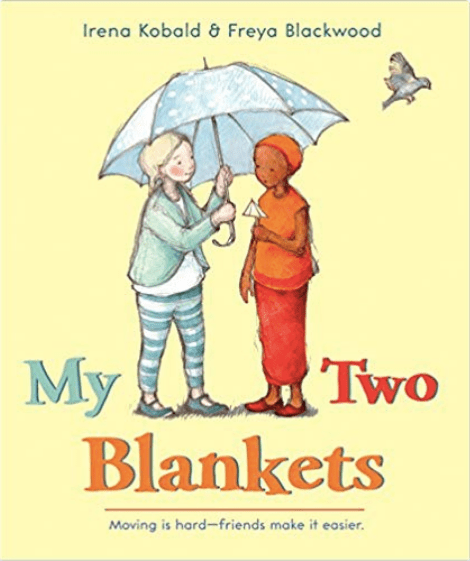
My Two Blankets establishes how essential it is for friendships to be made for those who are new to a country and trying to find acceptance. This book introduces the reader to a girl who had to move to a different county with her aunt because of a war that is going on in her in her native country.

This book incorporates the themes of acceptance, building friendships, immigration, and sense of self. When Cartwheel and her aunt move to the new country to find safety, but when they move there Cartwheel feels strange and does not feel like she fits in. Throughout this book she is trying to find acceptance and belonging. One quote in the book that relates to this is, “When I went out, it was like standing under a waterfall of strange sounds. The waterfall was cold. It made me feel alone. I felt like I wasn’t me anymore.” This quote demonstrates how she felt unaccepted and could not find how/where she belonged in this new country. By the end of the story, she has found her belonging. This is made through her friendship that is created by a girl she met in the park. This girl helps her learn new words and helped her feel like she belonged in the community. Cartwheel always had one blanket in the book that represented her native country, at the end she creates another blanket that represents the new country she is living in. In the process, she finds her sense of self. She recognizes that each blanket represents her and can see herself in both.

A moral value that is dominant in this book is immigration. The topic is brought up in the very beginning of this book when Cartwheel and her aunt have to move to a whole new country to find safety from the war that is happening in their native country. When coming to the new country, they have to find where and how they belong in this new place. For many immigrants, finding acceptance and belonging is crucial in their transition to a new country. Cartwheel had a very difficult trying to belong in the beginning of the book, but was soon able to meet someone who allowed Cartwheel to feel accepted and wanted to help her. I think Irena Kobald did an excellent job at fostering social consciousness. The issue of immigration has gone on for a very long time and is still an issue that has many arguments towards and against it. For this reason, many immigrants find it hard to feel accepted and to find their belonging in new countries especially in America. I am glad Kobald included the emotions Cartwheel was having and the girl that helped Cartwheel feel more accepted.

Wishtree

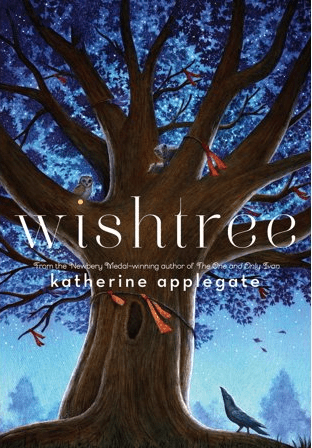
Wishtree is a story of bringing together a community who have lost sight of what a community is. In the story we meet a new family who has moved into the town and we get to know the daughter, Samar, very well throughout the book. Samar’s family has Muslim roots and some people in the neighborhood are not happy they have moved into their community. This book shows the importance of community and the values of love, support, and friendships.

The themes that are in this book are immigration, community, importance of friendships, resilience, and nature. Immigration is shown when Samar’s family moves into the neighborhood. They have to find a sense of belonging and people at first are not making it easy for them. There is a boy who carves “leave” into the tree in front of their home, people are looking at them differently, and Samar is having a hard time creating friendships. Samar even makes a wish on the Wishtree that she would make a friend. Immigration is also shown when Red, the wishtree, begins to tell the story of how the wishtree came to be. Red tells the story of a girl named Maeve and how she was an Irish immigrant. She also had to find acceptance in the community when she moved their. Later, she did ended up having generations after her continue the wishtree. Community is shown in the neighborhood when Samar’s schoolmates make wishes for Samar to stay since her family was thinking about leaving. As the reader, we mostly see community for those who live in or around Red. We see the different animals such as crows, owls, raccoons, skunks, and opossums that make up the community around Red and that can live in harmony with one another. They are each very different from one another, but they each bring an importance to the community in which they live and would rely on each other at times. Also, at the end of the book Francesca is reminded the importance of community and how her great great grandmother, Maeve, had to start her life in the community and how important it is to love and support those around us. The importance of friendship is shown through the animals and in Samar and Stephen. The animals, especially Bongo and Red, have meaningful friendships that have helped them overcome boundaries and have given them a support system when they need it. For Samar and Stephen, their friendship took a little longer to create, but once it was made, their bond could not be broken. Stephen also had his class write stay wishes for the wishtree for Samar because of how important their friendship was. Resilience was shown by the animals when the tree terminators came to cut down Red. The animals knew it was their home and Red meant so much to them and they did not want that to get taken away. The picture in the book that shows the resilience of the animals the best is on pages 202 and 203. There is a spread that shows the animals sitting in the tree, refusing to get out, so the tree cutters cannot tear down Red. Resilience was also shown when Samar and Stephen made Francesca read the journal Maeve wrote when first coming to America. They knew how important Wishtree was for everyone in the community and wanted Francesca to be able to hear it in Maeve’s words. Nature is also a theme in this book because Wishtree is about a tree that is home to so many animals and a tree that is so important for the community that is about to be torn down. The animals were forced to leave somewhere they felt safe because a human did not like their home. This is something that happens a lot because a tree is used for many resources that we use in our everyday life. However, it is critical to think about the homes that are being taken away from the animals that have relied on it for so long.

The characters in Wishtree were very believable because it was easy to connect to their emotions. Red is a tree, but when Katherine Applegate begins to include the feelings and the hopes Red has for the ones around it, it becomes effortless to connect with Red and to feel the same emotions. This applies to every animal and to Samar and Stephen. Each of them are facing a problem and they have have different feelings about what is going on. They want the same thing, but the way they each approach the situation is different. Applegate did a wonderful job at connecting the characters to real life events which each reader will have their own opinion about. Having these real life events like creating friendships or saving a tree are topics that the reader can relate to and become connected to.

There are multiple moral values portrayed in Wishtree such as immigration, environment, and race. The wishtree begins because of Maeve who was an immigrant and then later Samar’s family comes to live in the community as well. The community is not very accepting of either one of the immigrants when they each move there and for most immigrants it is hard to find acceptance and to begin friendships because they are viewed differently. This book describes how difficult it can be, but how meaningful the friendships are once they are made. Environment is another moral value. The tree provides for many animals and people in the community and without it, the animals have to find a new home and the people lose a symbol of hope for their community. The environment is something that is very essential for all that live around or in it and some people push the environment to the back burner because it does not seem important at the time. Wishtree shows just how important the environment is and how instead of tearing it down, we should be building it up. Race was not fully discussed in the book, but it was mentioned what ethnicity Samar was and what she looked like. Based on how others treated her and her family, it was inferred that she looked different than the rest of the community and her race probably had something to do with that. It is imperative to think past someone’s race. Just because they look different does not mean they should be judged for it.

Connections Between Stories

The connections these three books share are the themes they each share which are immigration and finding acceptance/community. In each book, the author includes the emotions of the immigrant that is moving to a new country and how hard it is to transition to a whole new place. For Her Right Foot, the Statue of Liberty is the one who is being looked at as an immigrant because in reality she is. It also mentions how there are many immigrants that come into America and looking for a new start or a better life. In My Two Blankets, Cartwheel is faced with many new things that are strange and unusual for her. She has to learn how to adapt to her new surroundings which is very difficult at first. in Wishtree, Samar is in a new community where it seems hard to be if a person is an immigrant. She has to learn how to make new friends and how to live this new life. In each book, someone is trying to find acceptance. Whether it be the immigrants that are coming into America in Her Right Foot, Cartwheel and her aunt, or Samar and her family. Finding acceptance in a place that is completely new and where there are not many others that may look/act like them can be challenging and feeling accepted by others is a great barrier to overcome.

Each book has the theme of immigration, but each one approaches the topic differently. In Her Right Foot, immigration is focused around the people who are coming to America and how one of America’s well know statues is an immigrant herself. In My Two Blankets, the book is focused around Cartwheel’s point of view and how she feels being in a new place and trying to fit in. In Wishtree, Samar’s story is not from her point of view but from Red’s. In each book, the character that is the immigrant have different perspectives and stories of how they are handling the change. This is important thought because it’s true. Every immigrant has a different perspective when coming into a new country like America and find their acceptance in different ways.

Teaching Connections

These books go great together to teach with because they each cover the topic of immigration. This is an important topic to cover in school and some students may be in the same situation or can relate. Immigration is a topic that I feel that does not get talked about or covered enough especially in younger grades. To me, I think it is important for students to begin to know what immigration is and to hear stories about those who are trying to find acceptance and trying to adapt to a completely new country.

I would definitely use these three books in my future classroom because they are each understandable for elementary aged students and I think the students would like to learn facts about the Statue of Liberty and learn more about immigration. I have also seen many projects that people have done in their schools that relate to Wishtree like making their own wishtree or making wishes for the environment and for immigrants. I think these ideas and values will make a huge impact in a child’s life.

The Wild Robot and The Girl and The Wolf

The books The Wild Robot and The Girl and The Wolf are both about connections that would normally not be made. In both of the books, the main characters lives are impacted by animals in the woods and the relationships that are formed change the main characters lives forever.

The Wild Robot

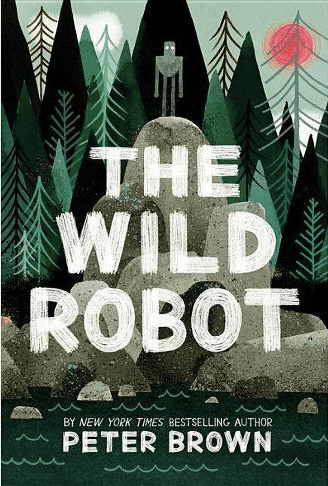
The Wild Robot amazed me and made many emotions arise within me. This book is a true masterpiece and demonstrates the relationships that can truly impact and change ones life. In the beginning of this book we start out with one character, a robot, who is named Roz and we continue to follow her journey throughout the book. She is washed upon the shore in a wooden crate and is turned on by accident by an animal that lives on the island that she has washed up on. This island plays a huge role in the rest of the book and the animals that live on it do as well. When she begins her journey on this island, she is turned away from and everyone thinks she is a monster without even trying to get-to-know her. Later, her life and her role on the island changes drastically.

Peter Brown made these characters truly believable by the emotions that were poured into each character. When reading this book, the reader is able to easily connect with the characters and feel the emotions and changes each one is going through especially Roz and her son Brightbill, who is a gosling. The capability Brown offers of feeling and connecting to the characters makes the story seem like a reality and feel believable. Also, the amount of detail Brown includes makes the reader feel like they are apart of the story and on the island with the rest of the characters. The whole time, as the reader, I was waiting to find out what was going to happen at the end and wanting to know how the lives of Roz and the other animals was going to end. This book also made many connections to life. There are a variety of relationships that we make throughout our lifetime and each one impacts us greatly. This is another reason this book is so believable because each relationship Roz forms is a relationship that someone has had as well. Not with animals, but with people in real life.

The setting of this book also plays a huge role in this story. The setting of this book is on an island that is filled with animals, foliage, mountains, waterfalls, and caves. The main point of the importance of this setting is it is definitely not where Roz was suppose to end up or in the beginning belong. She cannot swim, she does not know where to live or how to live in the woods, and she did not know how to talk to the animals. Later, when making the relationships with the other animals, she learns that with their help she can accomplish many of the things she could not when she first arrived. Because of the setting she was in, she had to learn how to build a home for her and her son, she had to learn how to become a mother, she had to learn how to grow plants, and she had to learn how to survive on an island that was not suitable for a robot. The island made her learn and change into the robot she never knew she could be. It made her learn how to communicate with animals and how to become the best mother she could be for Brightbill. If it was not for this setting, Roz would have not learned all the things she did or create the meaningful relationships this whole book is based off of.

The meaning this book conveyed to me is that we cannot judge a book by it’s cover. I know that sounds very cliche, but it is so true for this book. When Roz first arrived everyone thought she was a monster and they should stay away from her. As they began to know her better, they realized she was no monster and only wanted to create meaningful relationships with the animals on the island and she wanted to be the best mother she could be for her son. This book is very worthwhile for elementary/middle school aged students because it definitely teachers them the meaning of getting to know someone before casting judgement on them. This could be on a student who is new to the school or someone they would never see themselves being friends with. This book is great for any age because it makes you realize the importance of getting to know someone and who they truly are.

The theme that was shown greatly in this book is love. This was shown throughout the entire book from when Roz found the gosling and knew she had to take care of it and when her, when others helped her learn how to survive in the wild , and when her friends had to come together to stay safe in the winter. Another theme that was shown was breaking the definition of what a normal family would look like. This is shown when Roz takes on the role of being Brightbill’s mother. At one point in the book, Brightbill is around the other goslings in the pond and they begin to laugh at him and call his mother a monster. When this happens Roz sits down with him and explains that she is not his birth mother, but “there are many kinds of mothers” (125). During this chapter of the book that is “The Strange Family” Roz is given the opportunity to show that they are not a normal family, but they are a family and she loves Brightbill just like his birth mother would. Brown also does a great job by writing, “There are may kinds of mothers. Some mothers spend their whole lives caring for their young. Some lay eggs and immediately abandon them. Some care for the offspring of other mothers. I have tried to act like your mother, but no, I am not your birth mother” (125). This quote shows the role that every mother, not just an animal, can play in their child’s life.

The Girl and The Wolf

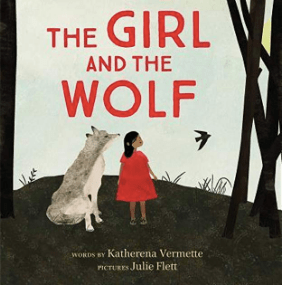
The Girl and The Wolf is about a girl who has to rely on a wolf to help her get out of the woods. This relationship is not what the girl was looking for, but was exactly what she needed. The theme in this book is independence. The girl is told not travel far into the woods especially since it is about to be dark outside. When she has found that she is lost, a wolf is there to greet her and to help her find her way back home. Once she has met the wolf, he teaches her how to become more independent by helping her realize she can do things on her own like find food and find her way home. There times in the book where the wolf asks the girl questions about what can she eat or if she sees anything that she recognizes. When both of these questions are asked to her she says she doesn’t know. The wolf then has her close her eyes, take a deep breath, and then look again. When she does this, she recognizes that she can eat the berries and drink the stream water and she also sees trees that are around the camp site. The girl’s journey through this book is about becoming more independent and making decisions on her own. By the end of the story, when she recognizes the trees, she is running and realizes the wolf is no longer next to her. This is when she gained her true independence. She found that she no longer needed a guide for the rest of the journey and was fine on her own.

The illustrations and details in this book make the story seem believable. Each picture and the detail it includes matches with the words on each page and you can visually see where the girl is drinking the water from the stream. Also on page 8, the author writes about the wolf having big white teeth. The picture that follows shows the reader the wolf with his teeth showing to truly capture the moment of when the girl meets the wolf.

Connections Between Stories

The connections these two stories share are the relationships that are made between the main character and the other characters in the book. Both of the main characters in the books, Roz and the girl, both meet unlikely companions to help them. Once the main characters find the help they need, they are able to reach their goals in the book. An example of this is Roz finds Brightbill and decides to become his mother. When this relationship is formed, other animals start to help Roz take care of him by helping build a home and helping her make more friendships. In The Girl and The Wolf , the girl meets a wolf in the woods and is at first afraid but finds the wolf as her guide out of the woods. Her relationship that is formed with the wolf is her way of getting the help she needs to get back home.

When reading these two books, I saw many similarities between Roz and the wolf. When first meeting Roz and the wolf, people thought they were monsters and that they should stay away from them. As The Wild Robot progresses, the animals in the woods find that Roz is no threat to them and actually wants to make friendships with the other animals on the island. They also find that she is very helpful and can do many things on the island like help build huts, make a fire, and grow a garden. In The Girl and The Wolf, the girl sees that the wolf is there to help her and she becomes less afraid of him. She finds that he wants to assist her back home and he helps her find food and water as well. Another similarity they both share are acting like parents. Roz does become a parent and helps Brightbill survive by feeding him and building him a home. She also teaches/helps him learn how to fly and she becomes his greatest supporter. The wolf demonstrates examples of being a parent when he begins to support the girl on her journey home. When the girl is confused about what to do like looking for food or looking around to see what she recognizes, he has her to close her eyes, breathe in and breathe out, and then open her eyes again to see what she finds. By doing this is taking on the role of a parent by teaching her she can do things on her own, but still needs a little guidance.

Teaching Application

These books go great with one another because they are both about unlikely friendships and relationships that are made. These books are different from each other, but also the same when looking at the underlying meaning of each one. Both of the book would be great to include in a classroom and to have a discussion on. The class could talk about the themes that the books share, the comparisons of the characters in each book, the roles that each character plays, and how the topics of the books can relate to real life events. The students would have to think meaningfully to discuss these topics and to create ideas from each book.

I could foresee my self using these books in my future classroom. I would use it more in upper elementary levels or in sixth grade. These books contain so much meaning and the content is very impactful. The students would love these books and the topics that we would cover are topics that the students could apply to their lives, especially at this age. Many of them are learning/wanting to fit in or wanting to become more independent and both of the books can play a huge role in this part of life. Also having discussions about the different characters and the roles they play in the community would help the students learn that everyone has a unique reason for being on this planet.

Evaluating Children’s Literature

Guidelines for Evaluating Children’s Literature: Questions to Consider

  1. How did the author make the book believable? In other words, how true is the emotional reality of the story…
  2. Discuss one of the main characters. How did the author make this character unique and believable? What issues
    does this character grapple with? How does the character evolve across the book? How were you able to relate
    to the characters? (You may wish to discuss the main character’s relationship to other characters)
  3. Discuss the setting. Was the setting essential to the plot of the book? Explain why or why not. Does it add depth to the book?
  4. What did you learn about the time period in which the book was set? Do you think the time period was described accurately? How do you know?
  5. What elements of the author’s style and language drew you into the book? Explain and give examples. Examine
    the poetic or literary devices used in the text (i.e. simile, metaphor, flashback, onomatopoeia, imagery, alliteration, personification, symbolism). What does the author draw upon to write this story? Are there patterns,
    repeated phrases, predictable structures?
  6. What factual information did you learn? Did anything surprise you? How do you know if this information is
    accurate?
  7. What does the book remind you of from your own life?
  8. What special meaning or message does the book convey to you? Do you think this is a worthwhile theme for elementary/middle-level students? Explain.
  9. How does the point of view affect your reading? Who is the implied reader or intended audience of the book? Whose background knowledge is privileged in reading this text?
  10. How does this story relate to the world as you see it?
  11. Are any characters privileged or marginalized? How are the lived experiences of historically minoritized populations represented in the text?
  12. What moral values and social-political messages (race, gender, religion, class, poverty, environment,
    immigration, education, homelessness, etc.) are dominant in the text? Does the author foster social consciousness?
  13. In this text, who had the power to make choices for a better world?
  14. Does the author present cultural details and markers authentically and multidimensionally? Are these
    cultural details integrated naturally?
  15. Is the author/illustrator a cultural or #OwnVoices insider (e.g., Do they self-identify as a member of the community portrayed in the book?)? Has the book been endorsed by a reputable organization and/or insider with expertise?
  16. Does the author use details accurately and does this work avoid stereotypes? Does the author use language authentically?
  17. What experiences did the author bring that would help them represent the culture or social/environmental issue fairly?
  18. How does the author build tension in the book? How does the mood of the book contribute to the tension?
  19. What classroom connections/activities naturally link to this book. Discuss a specific resource, strategy, activity you would incorporate into your classroom.
  20. What reading/writing mini-lesson could be taught through this book or passages from the book?

Guidelines for Evaluating Picture Books: Questions to Consider

Artistic Technique/Media: What artistic media or combination of media was used? How do the illustrations support the text and the meaning of the story? Does the illustrator’s artistic medium enhance the fit between text and pictures for this book? Is the art accessible and interesting to the intended audience? Consider the elements of design (line, color, space, shape, texture, perspective) incorporated in the artwork. Does the book incorporate a horizontal or vertical layout or both, and is this important? What about font choices?

Interplay of Textual and Visual Images: Analyze the relationships between the text and the illustrations. Does the
text alone hold the reader’s attention? What kind of gaps does the author/illustrator leave for the reader to fill in? Are
details purposefully left out to create tension? How does the story flow from page to page? Are there borders that separate objects, cross over in language and image from page to page, or tell a story within the borders? Are there any
stories within the main story? Are there parallel texts or ideas being presented?

Themes: Throughout the book, the author may develop a theme. Does the author have an issue that they keep raising? A point, motif, or idea that recurs throughout the book? These are the author’s themes – arguments or life lessons that the author particularly wants to emphasize.


Examine the Experience of the Author and Illustrator: Does the author/illustrator have experience with the culture or population that they are representing? Is the author/illustrator a cultural or #OwnVoices insider (e.g., Do they self-identify as a member of the community portrayed in the book?)?