Prior to the Readings
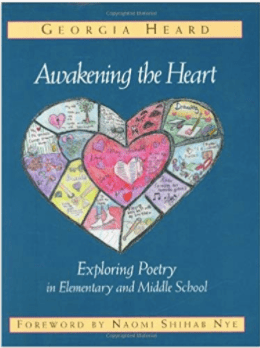
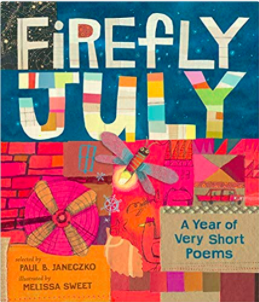
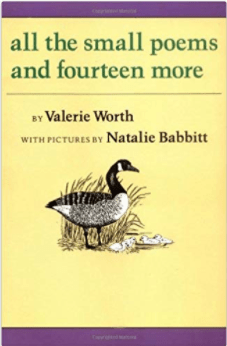
Readings for this week were, Awakening the Heart by Georgia Heard, Firefly July poems selected by Paul B. Janeczko, and All the Small Poems and Fourteen More by Valerie Worth.
Reading Poetry
I have always loved reading poetry, but sometimes feel like it is a lot to understand and take in. Luckily, I have had teachers in the past who help break down the poem to make it more understandable. I have also read poems that were easy to interpret on the first read, but they were long and used much wording. I remember growing up and read Where the Sidewalk Ends by Shel Silverstein and loving them. They were so enjoyable to read and they were short and understandable. One of my teachers even did a lesson on some of the poems and we created ways we interrupt the poem we chose for a project. That made reading the poems even more exciting. As I got into high school though, reading poems became a task and all of the poems we read were so advanced and as a high schooler, I did not even want to try to read and understand some of the poems that were given to us.
Writing Poetry
I never was much into writing poetry until this semester. Just like reading poems in school, writing them also felt like a task. I didn’t think I was good at them because I thought I had to include so much to get the point across and I was trying to make them look like the ones we were reading in class. It was not enjoyable and felt very tedious. I also think because I was comparing mine so much to the other poems, my own thoughts and ideas were getting pushed away so I could make my poem look “better”. This semester, I have found a joy in writing poetry and seeing how poems can be short and powerful or long and powerful. Having different mentor texts like Brown Girl Dreaming by Jaqueline Woodson has been very beneficial to see this two structures. She also includes haikus in her work and I sometimes forget haikus are also poems. Haikus are short, but they hold so much emotion.
Teaching Poetry
I have not had the chance to teach poetry, but I hope when I do it will be fun for all. I want to start poetry lessons in younger grade levels so they have a sense of what poetry can be and not get tangled up thinking what I did. When I learned about poetry, it was later in elementary school, but younger grades can do it too. This could potentially plant a seed of enjoyment into them and gain an understanding of poetry.
Criteria for a Really Good Poem
A really good poem is one that brings out the emotions. This can be joy, anger, envy, love, hope, sadness, and so many more. It’s one that can be understood by many and is relatable. I also need to know and feel the person who wrote the piece emotions as well. Imagery is also a great way to captivate these emotions as well and the layout of the poem. If the poem is in a spiral or in the shape of something, I am more intrigued to read it.
Poetry Environment
The environment when writing should be a comfortable (seating, emotonal, writing) and safe (encouraged, non judgmental) place. It should also be somewhere where literature is supported and encouraged. I have really enjoyed getting a poem every class for Dr. Frye. Each week she brings in a poem and gives each student a copy of it to hold on to. We read it as a class and soak in every word. Just providing students with these poems shows how a little can go a long way.
After the Readings
I still believe in everything I originally included in my prior reflection, but these readings have opened my eyes to more. One example was making sure students still know there are poets still writing poetry today (Heard, 1999). When I was in school, all the poems we read were from the past and we had no examples from the present. It is so important for students to know poetry is still occurring and to bring in examples of it. I also love the poetry centers (Heard, 1999) because each center brings something new for the student and to let them share their voice. Being able to share means so much to anyone and allowing students to do that shows their voice and work matters.
Extra Resource
The Poem Farm by Amy Ludwig VanDerwater is a great place to find incredible poems and extra resources.
http://www.poemfarm.amylv.com/
Heard, G. (1999) Awakening the heart: exploring poetry in elementary and middle school. Portsmouth, NH: Heinemann.
Janeckzo, P. B. (2014). Firefly july: a year of very short poems. Somerville, MA: Candlewick Press.
Worth, V. (1994). All the small poems and fourteen more. Square Fish.

 Mrs. Thompson's Blog