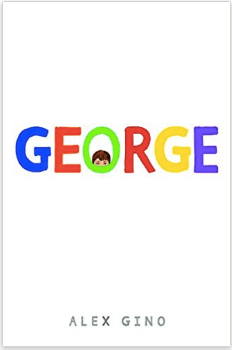
George is about a student in the fourth grade who was assigned a male at birth, but wants to be a girl and feels like a girl. She would love to be called Melissa instead, but has to hide this identity because she does not know how others will feel when they find out who she wants to be. In class, they are reading Charlotte’s Web and the class will put on a play. She has the idea to try out for Charlotte because then people could see her for who she truly is, a girl. When she auditions for the part, the teacher assumes it is a joke and tells her that since she’s a “boy”, she would have to audition for Wilbur. She does not because she knows she is not a boy and decides that she will not be in the play. Her friend Kelly wanted to support George/Melissa, so they made a plan for how Melissa could show the world who she truly is.
I enjoyed this book and thought it gave much insight into what life is like for someone who is struggling to tell others who they are and having to hide their true identity. Two characters who I loved were Kelly and Scott. Kelly is Melissa best friend and when Melissa first told Kelly who she is, it took Kelly a few days to process it all. Once she did, she supported Melissa so well. Kelly helped Melissa in the play and was the first person to call George, Melissa. Scott is Melissa’s brother and when Melissa told Scott who she was, Scott was accepting and didn’t think too much more about it.
Melissa also had bullies she had to overcome and she had to learn how to tell her mother. These can be two very difficult things for anyone who is trying to become who they want to be. Melissa had to learn how to face her bullies and how to overcome them. She also had to find ways of telling her mother she was a girl. This was one thing she feared the most because she didn’t know what her mother would say. When her mother first brought it up, she did not seem open to the fact her son wanted to be a girl and could not understand. Soon, she realized who George truly wanted to be and became very supportive. I feel there are many parents who find it hard to accept this change and some never find a way to understand what their child would rather be. I am glad in this story Melissa’s mother became accepting of Melissa and her wants.
About the Author
Alex Gino is the author of George and uses the pronouns they, them, theirs. Alex is a huge activists and advocate for the LGBTQIA+ communities since 1997. Alex decided to write this book because it is a book they needed when they were younger. When Alex decided to come out, there were no books on transgender children and Alex knew something needed to be done about that. Alex did not only write this book for trans people, but also for people who are cisgender to better understand the feelings and thoughts of someone who is coming out and how to better support them.
This is the link to Alex’s website: http://www.alexgino.com/ Here you can learn more about them and George. This is an additional link where Alex is interviewed about George and reads an excerpt of the book: https://www.teachingbooks.net/book_reading.cgi?a=1&id=12118.
Teaching Connections
This is a book I feel like teachers try to stray away from because of topic. However, I think it is something that needs to be talked more about in school because a lot of children are going through this and it is becoming more and more relevant. As teachers, we need to make our classrooms supportive of every student and we need to cover topics that could help our students feel more comfortable and/or how to support someone who is going through this change. Books are a great way to help students understand and are great for discussions. Discussions are how students can open up and talk about their feelings and thoughts. This can lead into activities such as writing and drawing what they understand about the LGBTQIA+ community.
Helpful link about gender: https://sites.google.com/view/gendermultimodaltextset/home?authuser=0
This website includes data about LGBTQIA+ in the classroom and helpful links on how to incorporate it more: https://www2.ncte.org/blog/2018/10/incorporating-lgbtq-students-texts-classroom/

 Mrs. Thompson's Blog